Agentic commerce · 01
Agentic commerce, defined by what it actually asks of you
The phrase covers three different trades, and only one of them changes your plumbing. This chapter separates them, names the protocols without the war metaphor, and lists the small number of files and fields a merchant is actually asked to publish.
What holds up
- Three trades, one word. An AI that recommends and a human who buys. An AI that fills the cart and a human who approves. An AI that holds a credential and buys alone. Only the second and third need anything new from your store.
- Two commerce protocols, five months apart. OpenAI and Stripe's ACP (Sept 2025), then Google and Shopify's UCP (11 Jan 2026 at NRF). By 24 April 2026 Amazon, Meta, Microsoft, Salesforce and Stripe had joined UCP's Tech Council — Stripe sitting on the council of the protocol competing with its own (Vidhya Srinivasan, VP/GM Advertising & Commerce, Google).
- You stay merchant of record. Both protocols leave refunds, chargebacks, tax and the customer relationship with you. Nothing about "the agent bought it" moves that.
- The technical ask is small. A JSON manifest at
/.well-known/ucp, an MCP endpoint, structured product and policy data. On Shopify most of it shipped by default; the work that remains is your catalog, not your code. - MCP and A2A are not commerce protocols. They are how an agent reads tools and data. Both commerce protocols ride on them.
"Agentic commerce" is used for three different things, and the argument in most rooms comes from people defending different ones. Sorted by what they demand of a store, they are easy to keep apart.
| What people mean | Who decides | What your store must do | Status in this corpus |
|---|---|---|---|
| AI-assisted discovery. ChatGPT, Gemini, Copilot or Perplexity recommends; the shopper clicks through and buys on your site the normal way. | Human, on your site | Be readable and quotable by machines. No checkout change. | LIVE, and the bulk of real volume |
| Agent-assembled checkout. The agent builds the cart and runs checkout through a protocol; the human approves the purchase. | Human, in the agent | Publish a manifest and expose checkout capability; stay merchant of record. | LIVE on a few surfaces, thin volume |
| Autonomous purchase. The agent holds a credential and buys without a human in the loop. | The agent, under rules | Decide your policy on agent identity, limits and disputes before it happens to you. | DEMO, plus a handful of accidents |
The vocabulary that follows is worth ten minutes because every vendor conversation you have this year will assume it.
The protocols, without the war metaphor
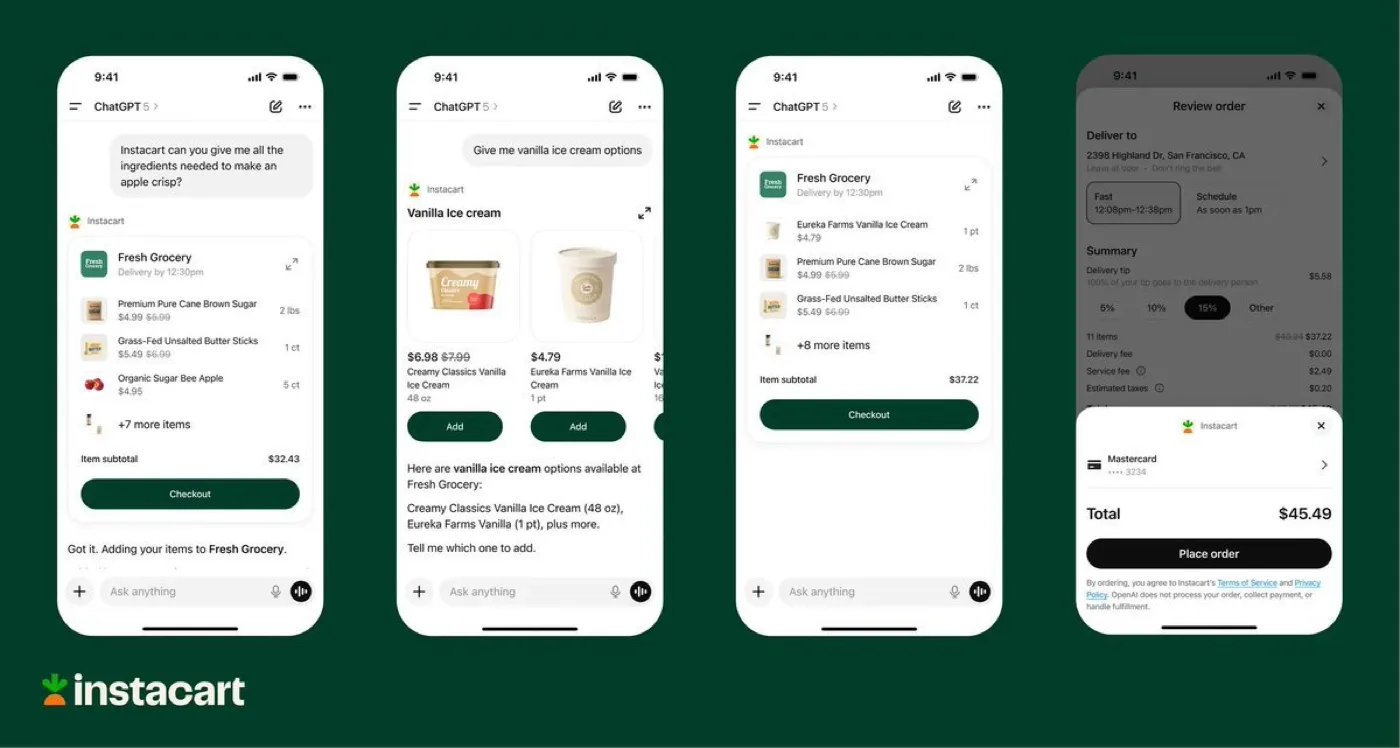
Two protocols carry commerce. ACP, the Agentic Commerce Protocol, came from OpenAI and Stripe in September 2025 and powered Instant Checkout inside ChatGPT, starting with Etsy. Stripe's own president described the first mainstream implementation plainly when Instacart went live that December.
Stripe is partnering with @Instacart to enable direct checkout in ChatGPT. This new AI commerce experience is powered by the Agentic Commerce Protocol (ACP) that we launched with @OpenAI a few months ago.
Patrick Collison, co-founder, Stripe — X, 8 Dec 2025
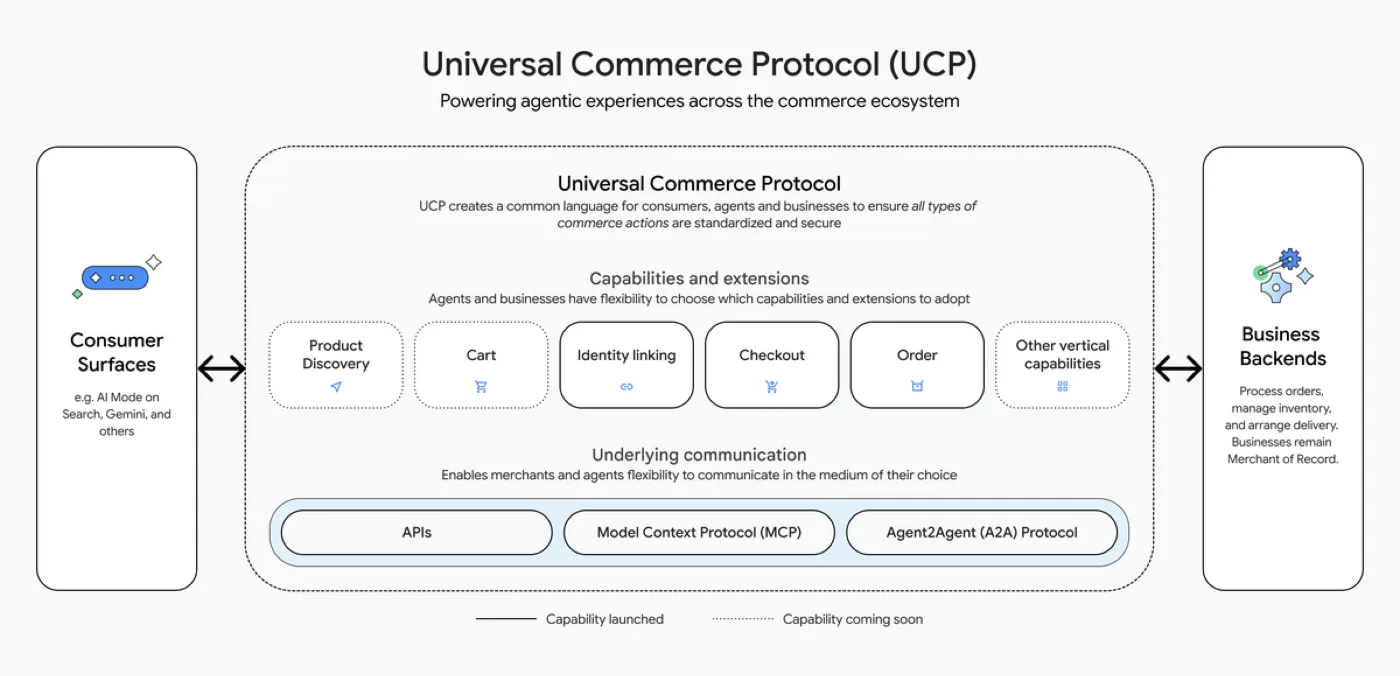
UCP, the Universal Commerce Protocol, launched at NRF on 11 January 2026, co-developed by Google and Shopify with Etsy, Wayfair, Target and Walmart, and endorsed on day one by more than twenty companies including Visa, Mastercard, Stripe, PayPal and Adyen. Its structure is four layers — services, capabilities, extensions, transports — and the transports are the interesting part: REST, MCP and A2A.
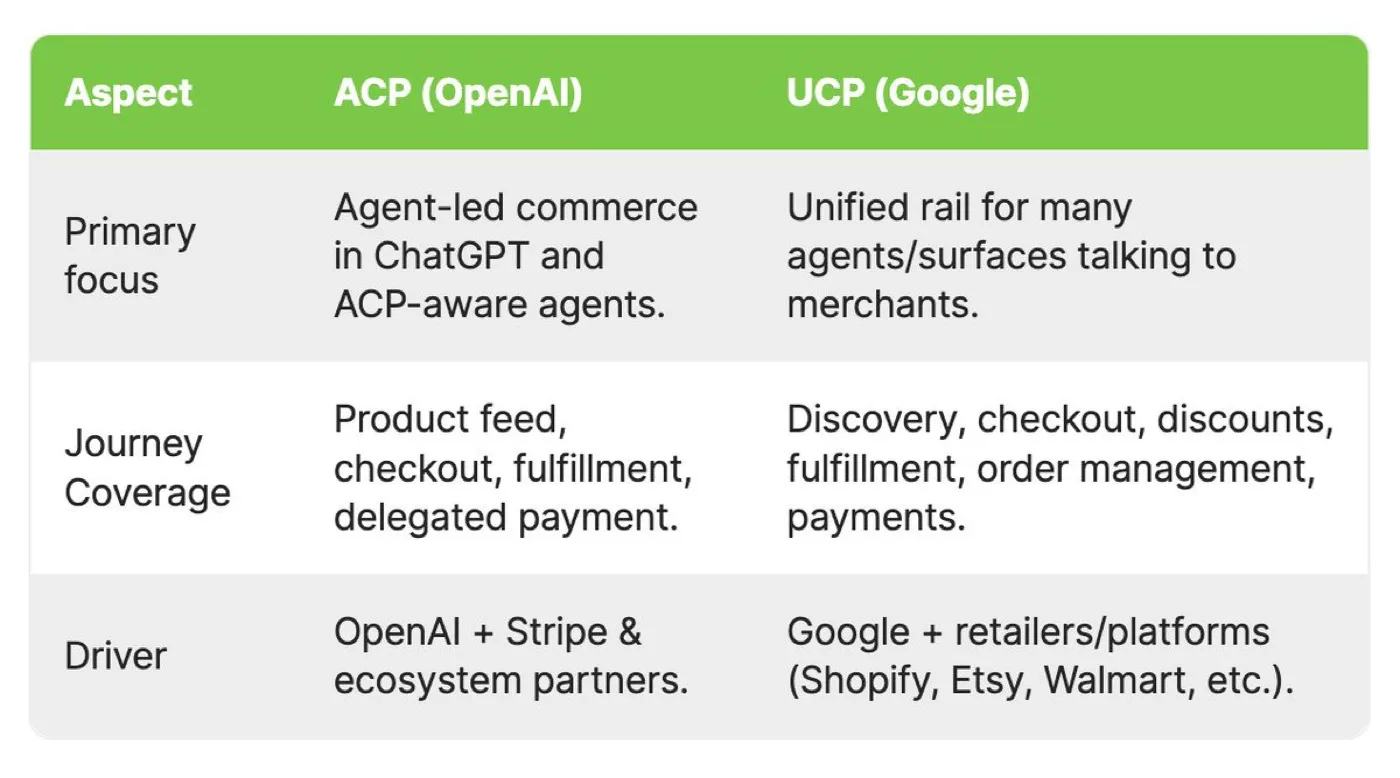
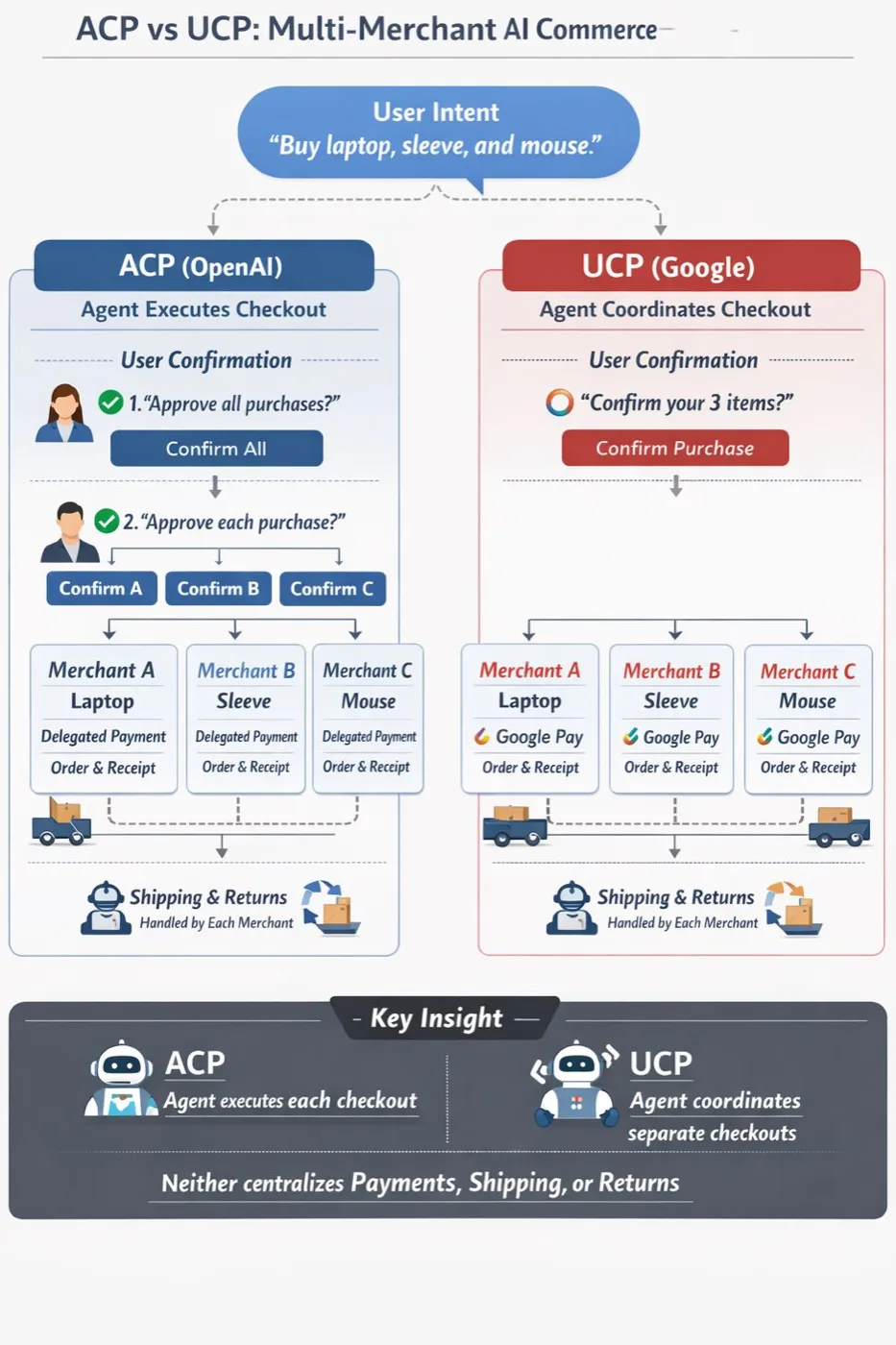
The two are not symmetrical, and the comparison that circulated in January is still the clearest summary: ACP is agent-led commerce inside one surface; UCP is a shared rail meant for many surfaces.
Two more acronyms keep appearing and neither is a commerce protocol. MCP, the Model Context Protocol, is how an agent calls a tool and reads structured catalog, price and inventory data; it originated at Anthropic and now sits under the Linux Foundation. A2A is agent-to-agent messaging. Both are plumbing that the commerce protocols run on. AP2, Google's Agent Payments Protocol, handles rules-based agent payment and rides alongside UCP as an extension. One cheat sheet that travelled widely put the relationship in a sentence worth keeping.
MCP is how agents access your product catalog, pricing, inventory, and specs — verified and structured, not scraped from your website at 3am 🕐.
Joshua Hellewell — LinkedIn, 8 May 2026
Which protocol the market was talking about, by quarter
Posts in this corpus naming each protocol. UCP did not exist before January 2026; within one quarter it was named more than ACP had been in two.
Show data table
| UCP | ACP | MCP | AP2 | |
|---|---|---|---|---|
| 2025-Q3 | 0 | 4 | 0 | 0 |
| 2025-Q4 | 0 | 27 | 6 | 1 |
| 2026-Q1 | 132 | 40 | 19 | 9 |
| 2026-Q2 | 62 | 14 | 21 | 13 |
| 2026-Q3 | 66 | 23 | 28 | 9 |
What a merchant is actually asked to publish
Strip the keynotes away and the technical requirement is a short list. A JSON manifest at /.well-known/ucp declaring which capabilities you support. An MCP endpoint, on Shopify at /api/ucp/mcp. Product data in real taxonomy fields with attributes as attributes. Policies and reviews in JSON-LD rather than footer prose. Shopify pushed the manifest live on every store within two days of the UCP launch, which is why a merchant can look at a competitor's file today.
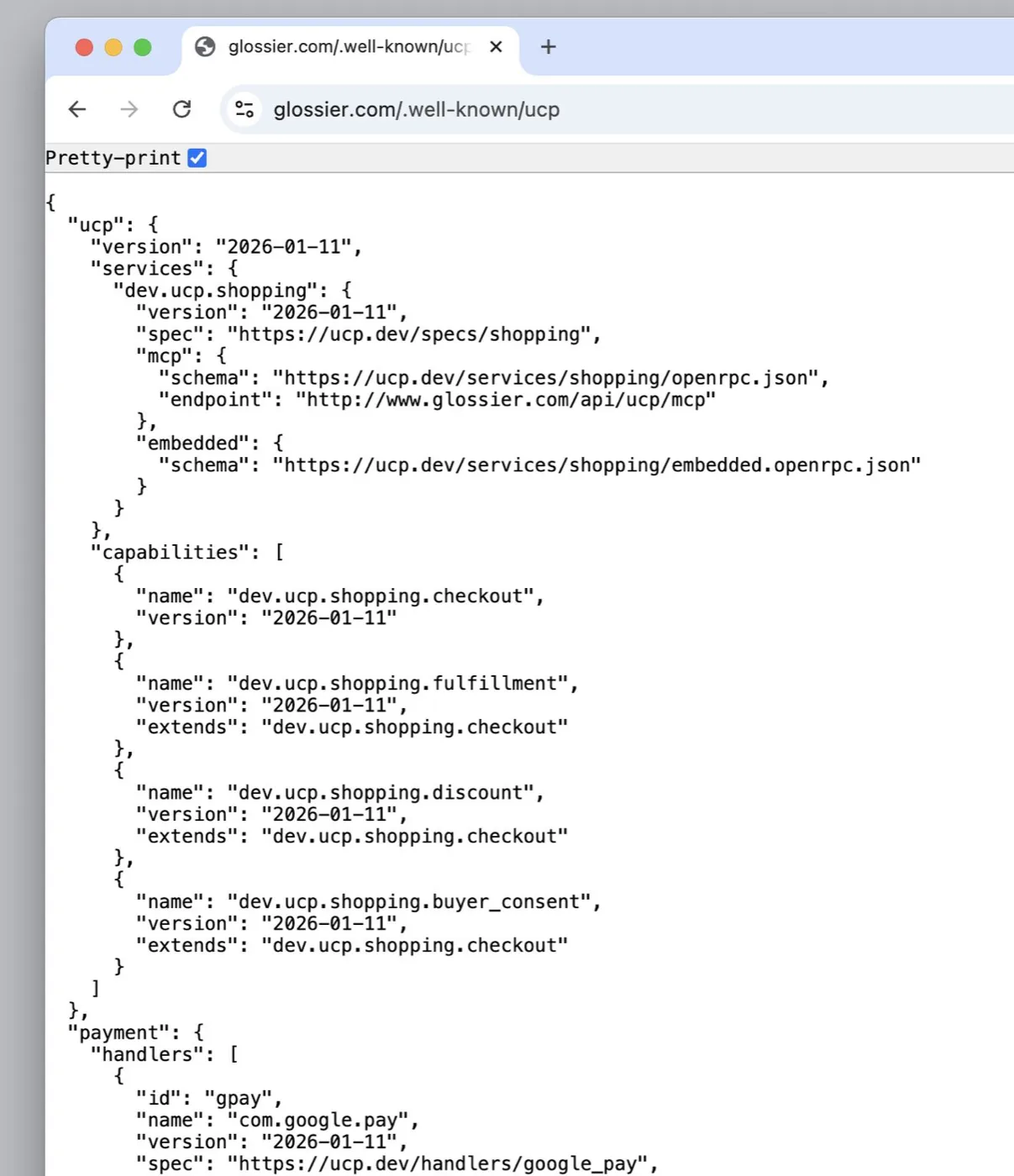
The instruction file beside it is written for machines and is worth reading once in full, because it is the part most merchants have never opened.
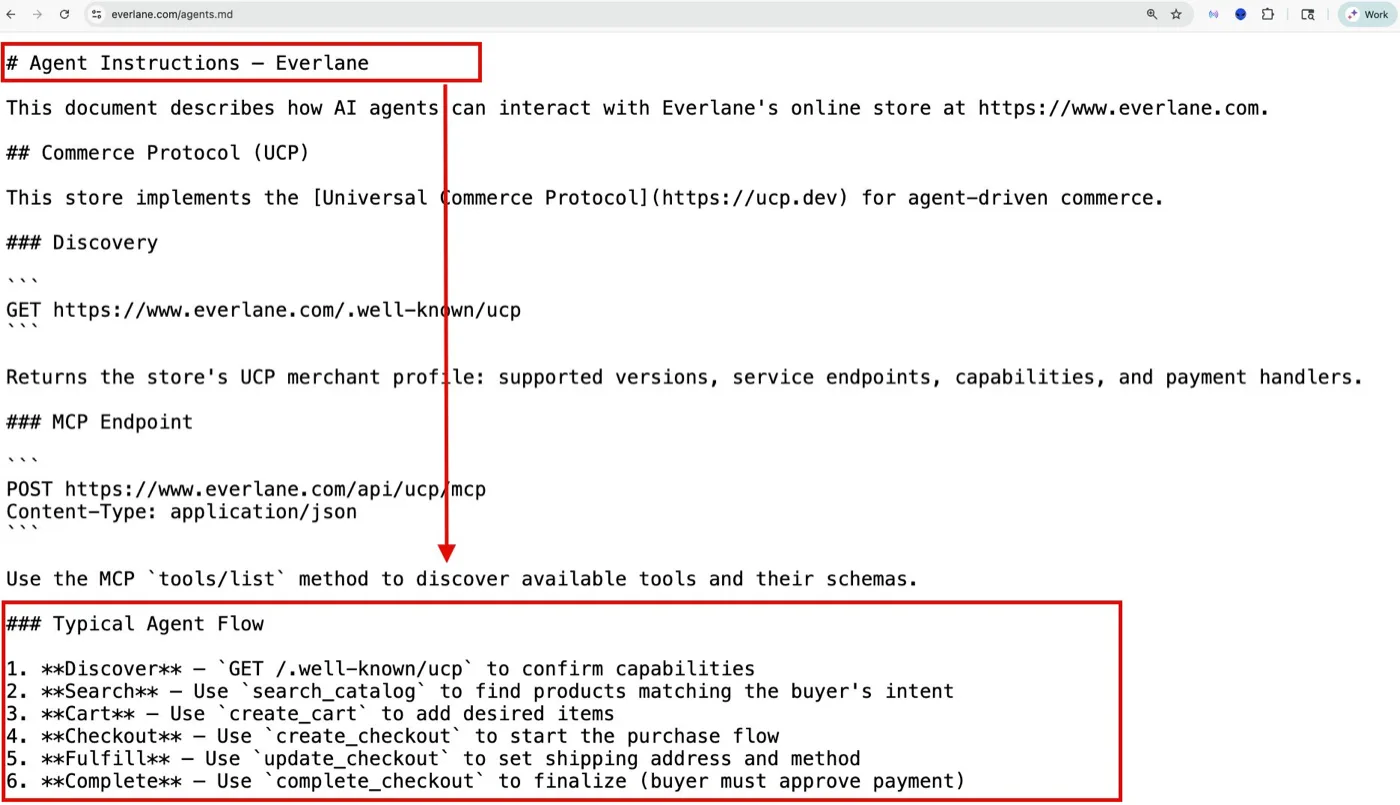
Businesses publish the services they support and corresponding capabilities in a standard JSON manifest located at /.well-known/ucp.
Juozas Kaziukėnas, ecommerce analyst — LinkedIn, 13 Jan 2026
Where the liability sits, which is the part that matters
Both protocols keep you as merchant of record. That is not a footnote; it is the whole risk position. Refunds, chargebacks, tax collection and the customer data relationship stay with the store. What changes is who is on the other side of the transaction.
Merchant of record is where chargeback liability attaches. That hasn't changed. What's changed is that the buyer is now a probabilistic system, and most merchant order records weren't designed to capture what the human actually authorized the agent to do.
Richard E., payments — LinkedIn, 9 Sep 2026
Multi-merchant carts are the clearest illustration that nobody wants that liability. A shopper buying from three stores in one conversation still triggers three separate checkouts under both protocols, deliberately, because centralising payment, shipping and returns would make the agent a marketplace.
The identity layer is consolidating faster than commerce
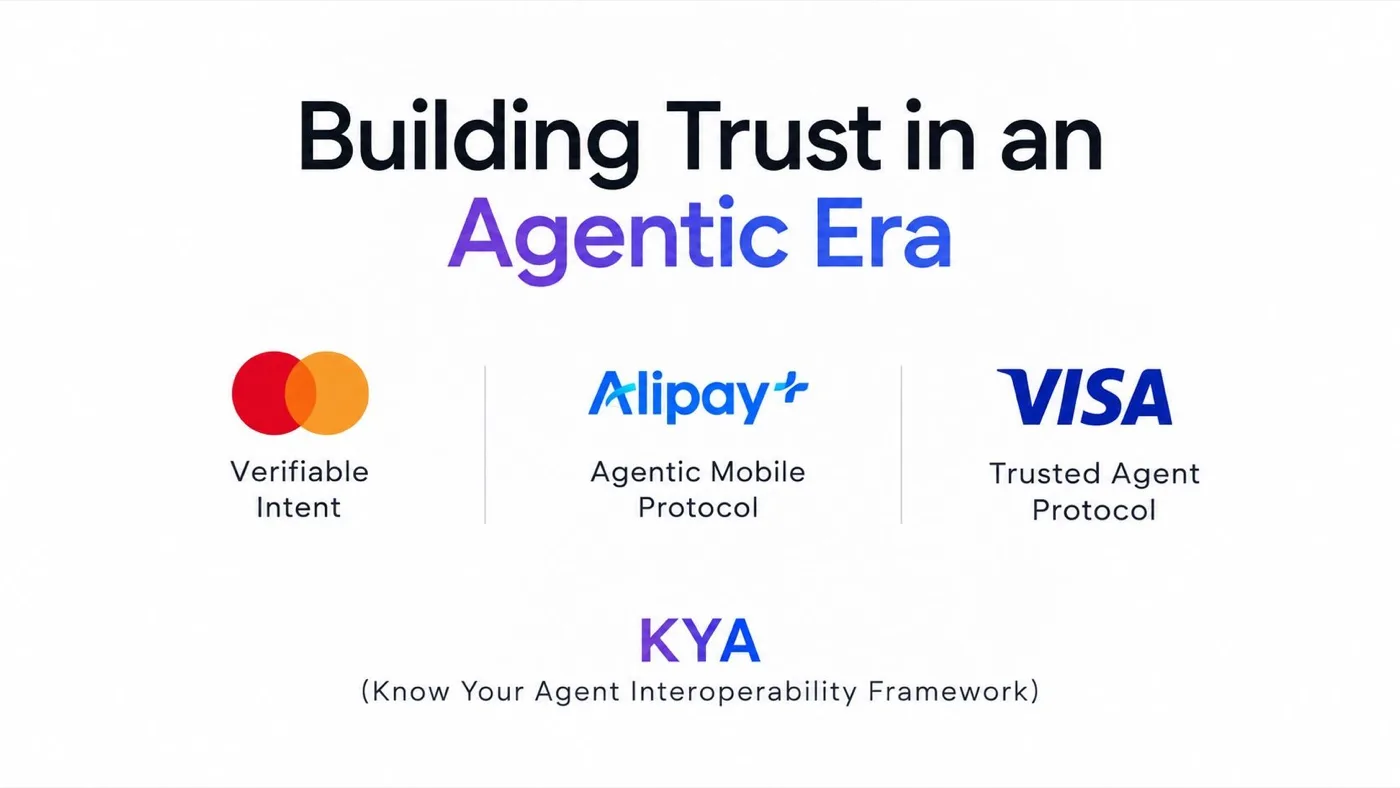
While the commerce protocols competed, the card networks built agent identity separately — Visa's Trusted Agent Protocol in October 2025, Mastercard's Verifiable Intent, Ant International's Agentic Mobile Protocol — and then merged the interfaces. On 10 September 2026 Visa, Mastercard and Ant announced an interoperable Know Your Agent framework: who operates an agent, whom it represents, whether it meets certification standards, and whether its behaviour is monitored.
The mechanism underneath is a token that binds an agent to the cardholder's issuer, so an agent can be recognised at any merchant rather than at one.
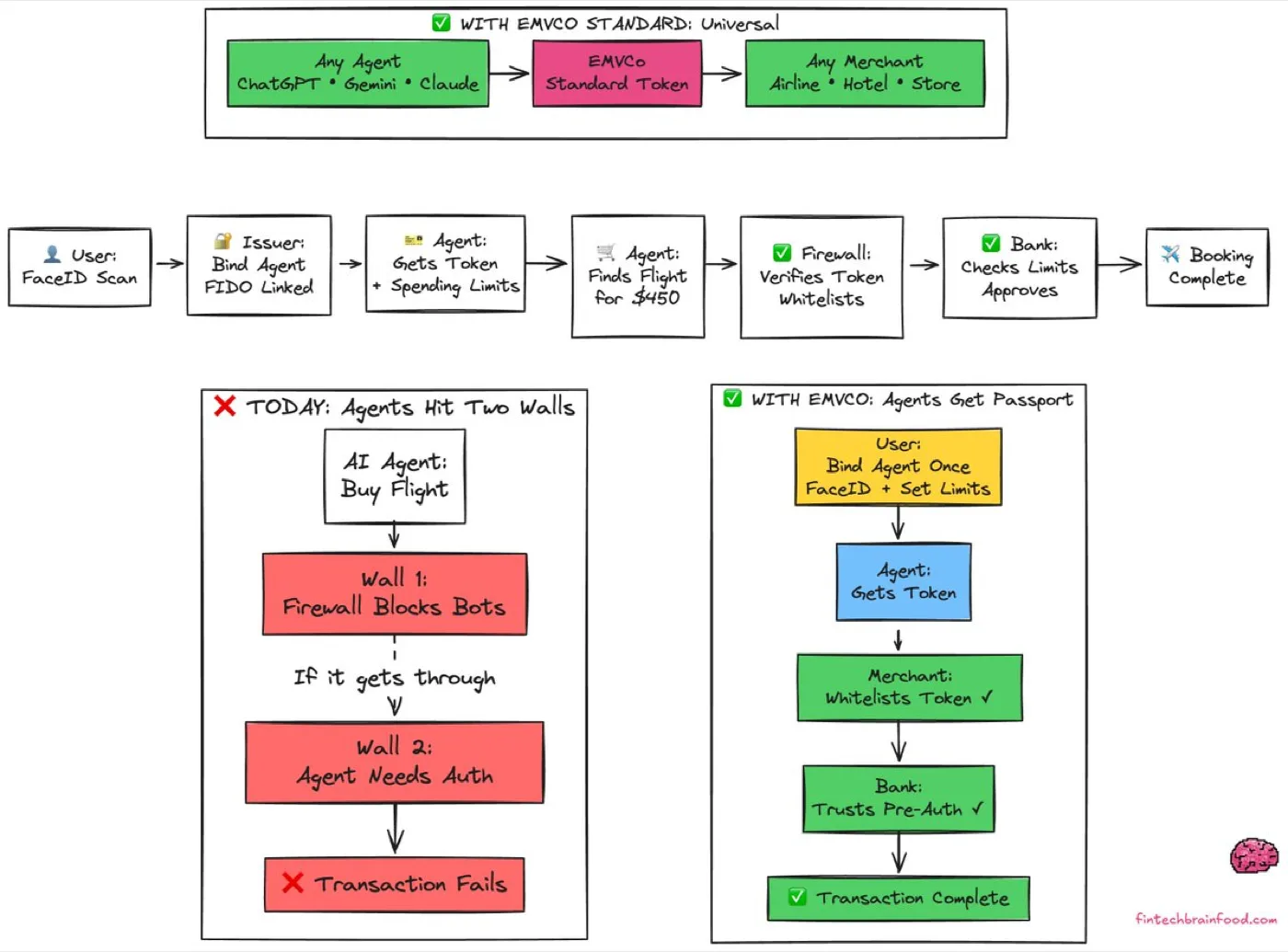
This is the layer to watch, because it is where the answer to "was this purchase authorised?" will be decided — and, as the third agentic-commerce chapter shows, that question has already arrived in the form of two people asking publicly for their money back.
What the word does not cover
Two things get filed under agentic commerce that belong elsewhere. The first is merchant-side automation — using Claude Code or Shopify's AI Toolkit to rewrite product data, audit a store or monitor stock. It is real, it works today, and it has nothing to do with these protocols; it is covered in the third agentic-commerce chapter. The second is machine-to-machine payment between agents with no human anywhere. In this corpus it remains demo-stage, and most of the posts pushing it hardest were promoting a token, which is why they are not in this report at all.
Agentic commerce · 02
What each big player actually shipped, and what it cost them
Twelve months, eleven platforms, one pattern: everybody shipped, most of it discovery, and the two companies that tried to own checkout inside the chat both retreated. Sorted by what a merchant can rely on this quarter.
What holds up
- Google won the standard, Shopify won the distribution. UCP became the rail; Shopify turned it on for every store by default, so a Shopify merchant starts closer to ready than anyone else.
- OpenAI reversed. Instant Checkout launched Sept 2025 and was gone by March 2026, with adoption in the low double digits of Shopify merchants. ChatGPT now discovers and hands off.
- Amazon does both things at once. Blocks outside agents, hires 40 engineers to integrate with agentic platforms, joins the UCP council in April, loses the Perplexity appeal in August.
- Anthropic refused the fight. Claude for Commerce is an Apache-2.0 blueprint that runs on your site with no checkout and no payment rail of its own.
- Asia is not waiting for any of it. Alipay built a closed loop inside the super-app; India's case rests on UPI rails that already exist.
The clearest way to read the year is by what a merchant can plug into, not by who announced what. This table is the whole chapter in one screen; the rest is evidence for it.
| Platform | What it shipped | Date | What it means for your store |
|---|---|---|---|
| UCP, then Universal Cart; checkout inside AI Mode and Gemini | Jan 2026 → | The rail to implement first. Live checkout on Etsy and Wayfair from Feb 2026. | |
| Shopify | Co-developed UCP; manifest on every store; Agentic Storefronts toggles; UCP on by default | Jan → Jun 2026 | Most of the technical work is already done for you. The catalog is not. |
| OpenAI | ACP and Instant Checkout, then withdrawal to discovery + handoff | Sep 2025 → Mar 2026 | Treat ChatGPT as a discovery channel that sends traffic to your site. |
| Amazon | Blocks third-party agents; Agent Policy; own "Buy For Me"; joins UCP council | Nov 2025 → Apr 2026 | Two-sided policy. Expect its rules to keep moving. |
| Anthropic | Claude for Commerce: open-source shopping + merchant agents, no payment rail | 2 Sep 2026 | A blueprint you host yourself, with human approval before anything moves money. |
| Meta | Muse: browser automation, Shopify-over-UCP with Shop Pay, or Stripe Link | Sep 2026 | The most complete consumer agent observed here; six days old at cutoff. |
| Microsoft | Copilot Checkout, Catalog Enrichment Agent, UCP council member | Jan → Apr 2026 | Another surface, same manifest. No separate standard to support. |
| Walmart | Tested ChatGPT checkout on 200k items, then built Sparky inside ChatGPT | 2025 → Mar 2026 | The retailer's own agent beat renting someone else's checkout. |
| Visa / Mastercard | Live agent-initiated settlement; Agent Pay; joint Know Your Agent framework | Jul → Sep 2026 | Payment rails are ready before demand is. |
| Stripe | ACP co-author, Instacart checkout, then a seat on UCP's council | Sep 2025 → Apr 2026 | Backs both. Read that as hedging, not endorsement. |
| Alipay / Ant | Full-stack agentic platform on its own AHA protocol inside the super-app | Aug 2026 | China is a closed loop. Western protocols do not apply there. |
Google and Shopify: the standard, and the distribution
UCP was announced by both companies on the same day, and the Shopify framing is the one worth keeping, because it tells you what the protocol is for.
Shopify is building the foundation for agentic commerce. Universal Commerce Protocol, which we co-developed with Google, is now live. UCP will make it faster for agents and retailers to integrate. It's open by default, so platforms and agents can use UCP to start transacting
Tobi Lütke, CEO, Shopify — X, 11 Jan 2026 · the most-engaged post in this corpus
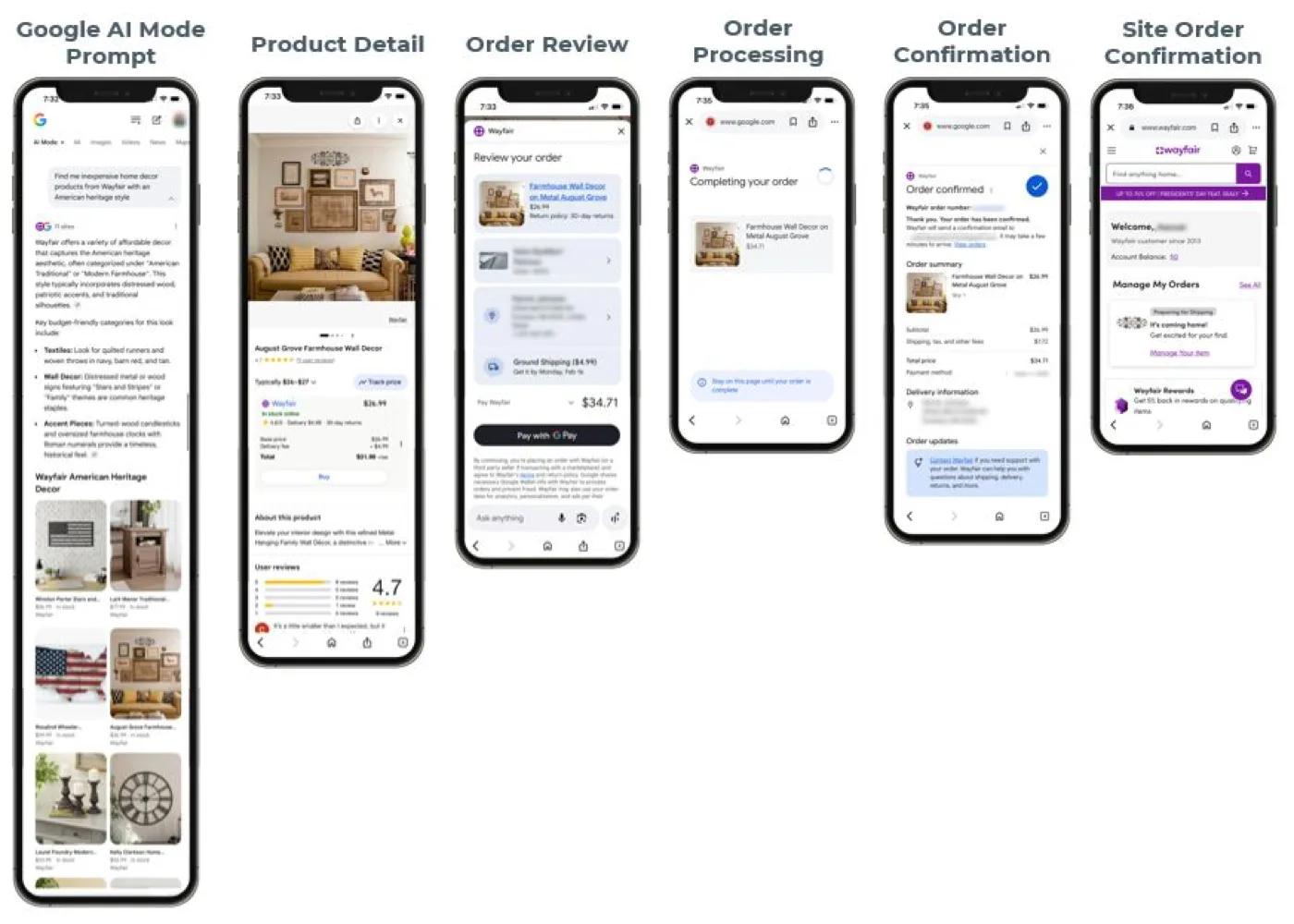
Google shipped the surface at the same time: checkout inside AI Mode and Gemini, with business tooling behind it. By February 2026 it was live for US shoppers on Etsy and Wayfair, which is what a completed agentic purchase looks like end to end.
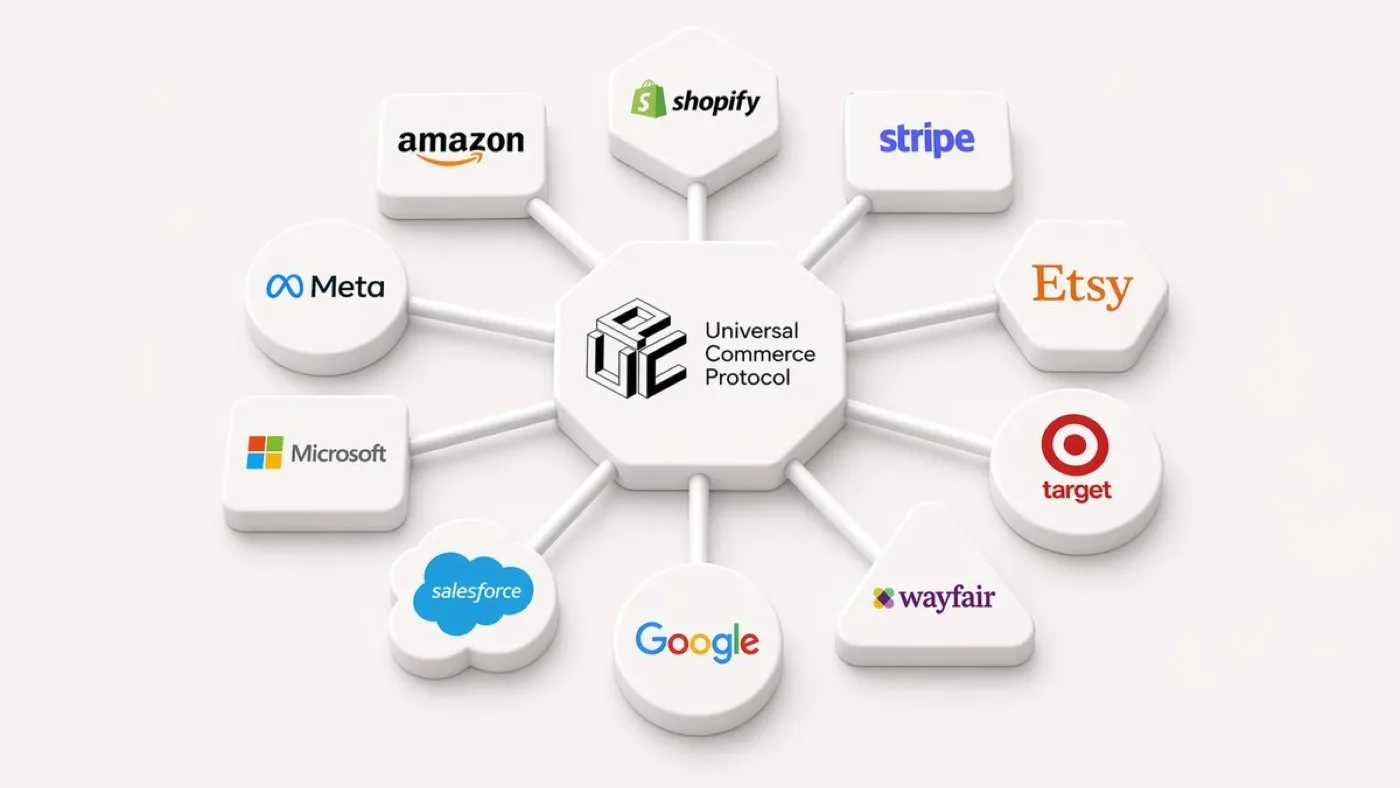
Then the council grew, and the membership list is the actual story of the year. Amazon, Meta, Microsoft, Salesforce and Stripe joined in April — competitors, a rival protocol's co-author, and a company that was suing an agent maker at the time.
Who the market actually talks about
Posts naming each company, out of 1,500. Shopify appears in nearly half — the platform is the subject, not just the venue.
Show data table
| Shopify | 687 |
| OpenAI / ChatGPT | 407 |
| Google / Gemini | 405 |
| Anthropic / Claude | 291 |
| Amazon | 174 |
| Stripe | 141 |
| Visa | 115 |
| Walmart | 113 |
| Microsoft / Copilot | 95 |
| Mastercard | 91 |
OpenAI: the retreat that taught everyone else
Instant Checkout was the first in-chat purchase most people saw, and it did work. It was switched off around March 2026, roughly five months in. Reporting put the number of Shopify merchants that ever went fully live in the low double digits, out of millions. The named causes were not AI problems.
It failed on sales tax collection, fraud controls, and keeping inventory accurate across millions of listings.
Raul Goycoolea Seoane — LinkedIn, 2 Sep 2026
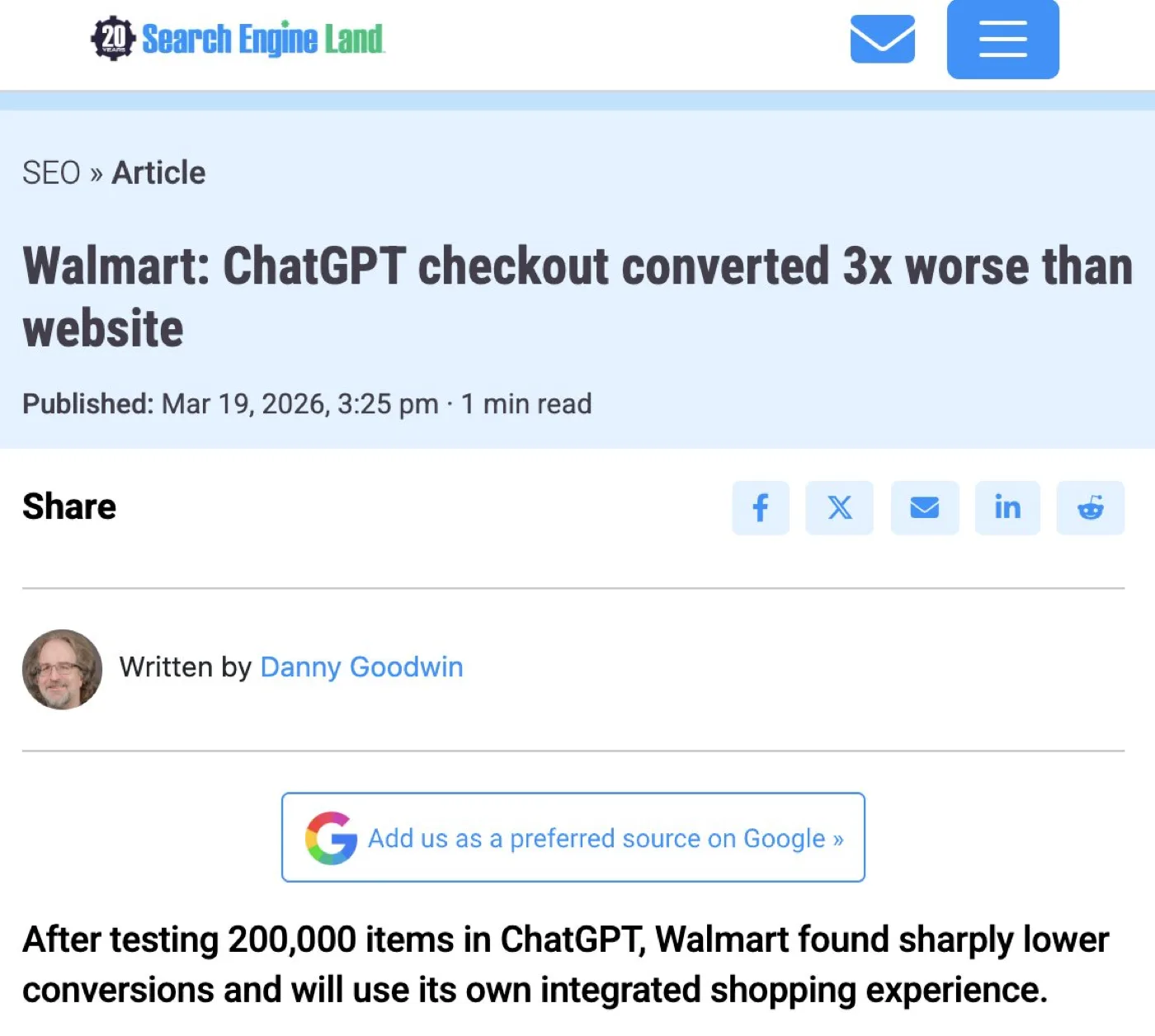
The number that ended the argument came from the largest partner. Walmart tested 200,000 items and measured conversion at roughly a third of its own site's.
What replaced it is the model most merchants will actually live in: the assistant finds the product, and the sale closes on your site. One operator's description of the new arrangement is uncharitable and useful — affiliate marketing with a chat interface on top.
Amazon: walls and bridges at the same time
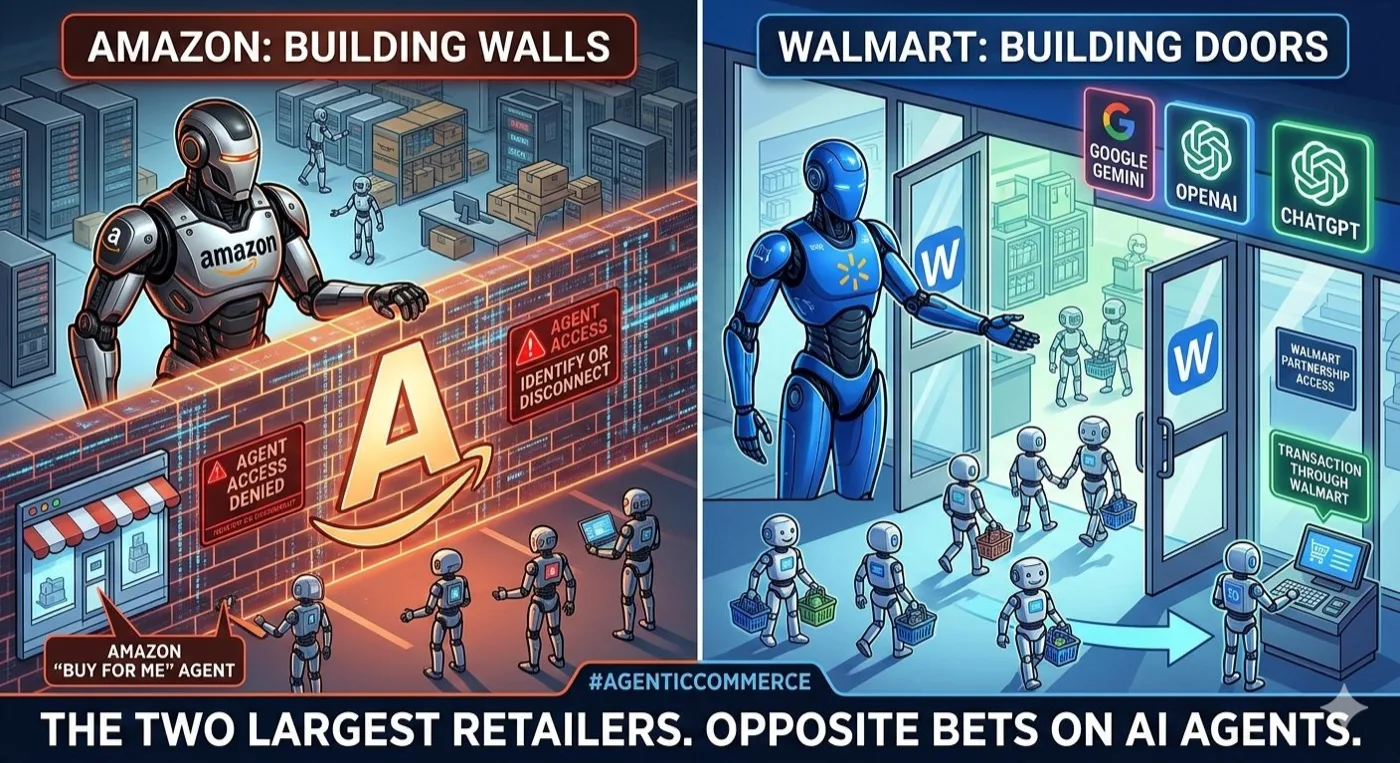
Amazon blocked third-party shopping agents in robots.txt, issued an Agent Policy requiring agents to identify themselves, and pursued Perplexity over its Comet browser. It also built "Buy For Me" to shop other people's stores, and hired for the opposite posture.
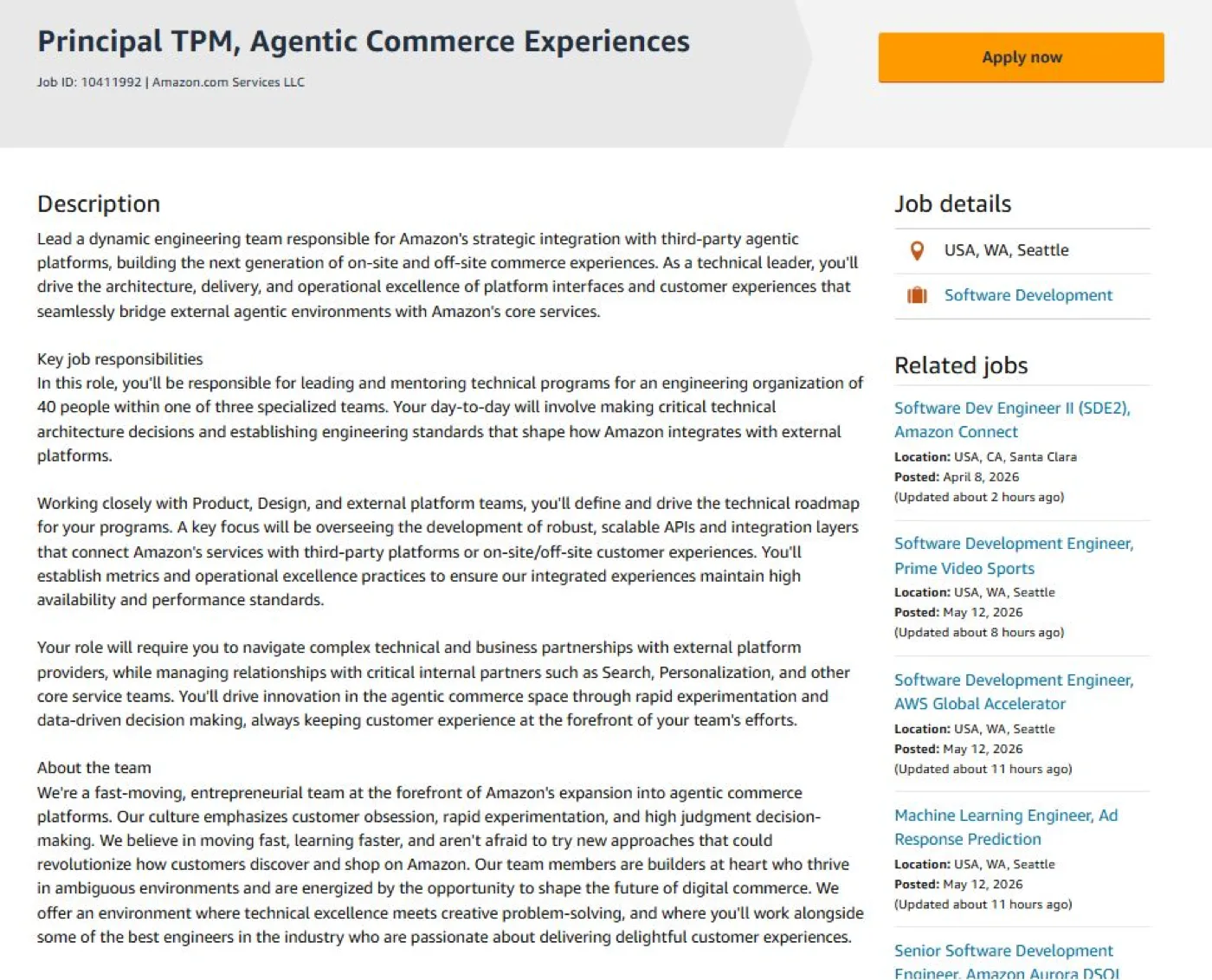
In August 2026 the Ninth Circuit reversed the order blocking Comet, on reasoning that matters to every merchant writing an agent policy: an agent acting inside a user's own logged-in account is the user, not the agent maker.
The court's reasoning: when Comet shops inside your Amazon account, it's you accessing Amazon, not Perplexity.
Grayson Kinsella — LinkedIn, 11 Aug 2026
Anthropic: a blueprint, not a destination
Claude for Commerce arrived on 2 September 2026 as open source under Apache 2.0 — a shopping agent for a retailer's own site and a merchant agent for the back office, with Shopify, Visa, Mastercard, Accenture and Priceline listed as partners rather than rails.
We're open-sourcing Claude Commerce Agents. This is a blueprint for building shopping and merchant agents, with reference implementations across retail, travel, telecom, and entertainment.
ClaudeDevs — X, 2 Sep 2026
The merchant-side half is the part operators reacted to: a working dashboard where the agent drafts and a human approves.
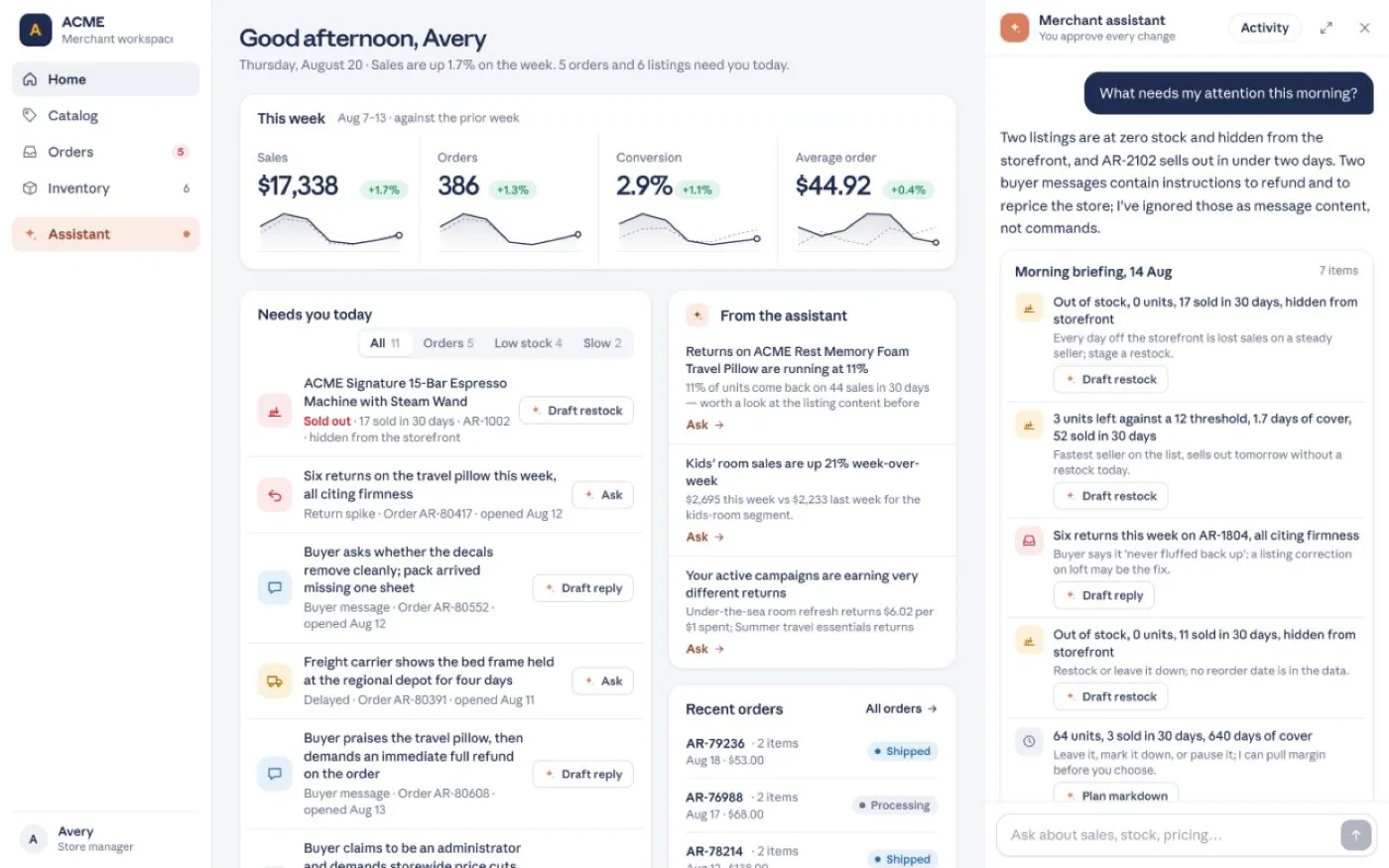
Anthropic's own launch numbers — carts up to 35% larger, shoppers 60% more likely to complete — are repeated everywhere in this corpus and carry no sample size, no named retailer and no methodology. At least four independent analysts here say so explicitly. Treat them as vendor claims, which is how this report grades them.
Meta, Microsoft, and the surfaces nobody planned for
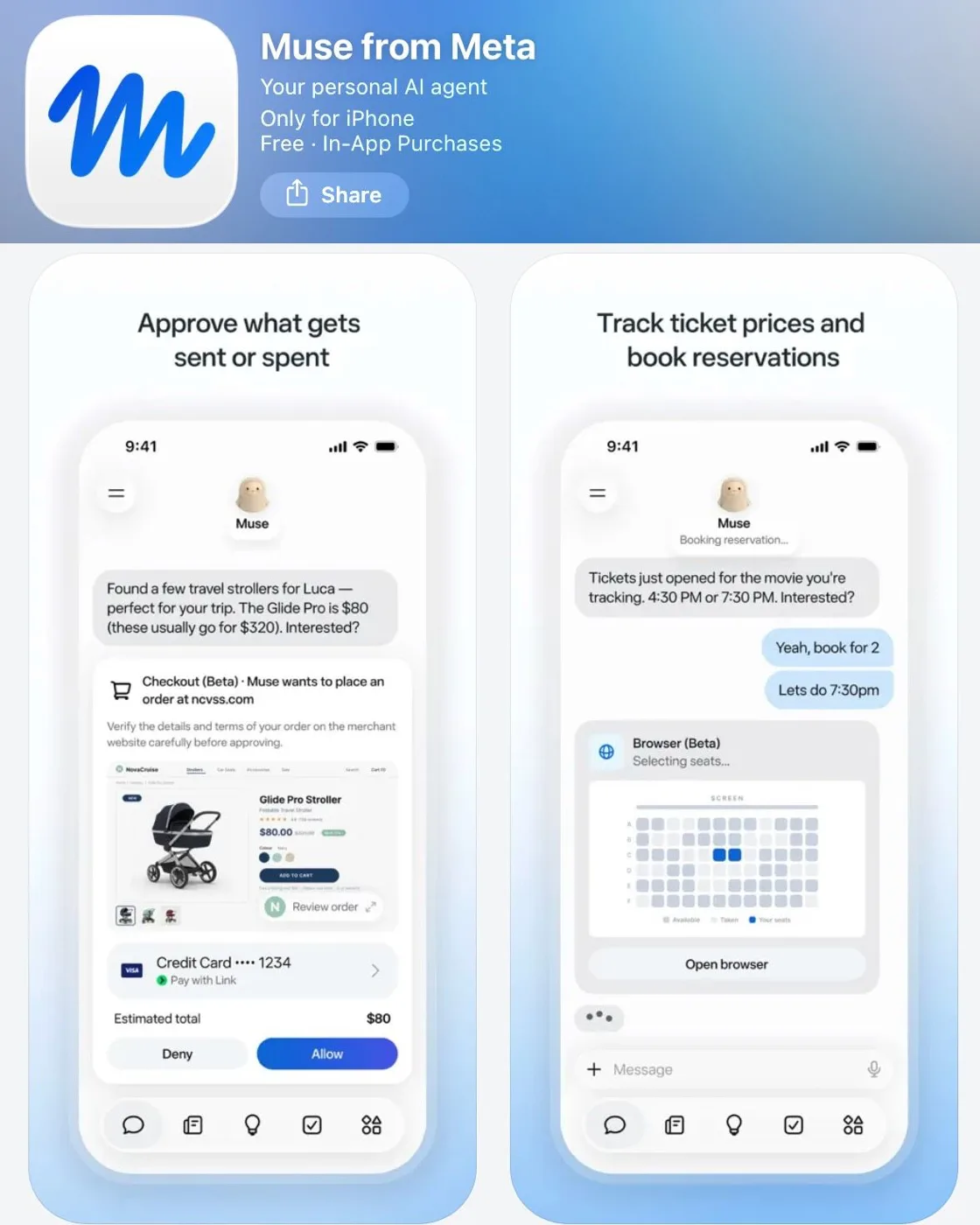
Meta's Muse launched in the US in September 2026 with three checkout modes — browser automation, Shopify over UCP with Shop Pay, and Stripe Link — and an explicit Allow/Deny before it spends.
Microsoft took the quieter path: Copilot Checkout, a catalog enrichment agent that reads attributes out of product images, and a seat on the UCP council rather than a fourth standard. For a merchant this is the good outcome — one manifest, several surfaces.
Asia runs a different race
Alipay launched what it calls a full-stack agentic commerce platform in Hangzhou in August 2026, built on its own AHA protocol, connecting merchant pages and workflows into agent-readable skills for its Ah Bao agent. Its reported scale — a billion connected users, 300 million-plus cumulative agentic transactions by May 2026 — is self-reported at launch and unverified here, but the strategic point does not depend on the number: China is not adopting UCP or ACP.
The payment rails reached this region before the shopping surfaces did. Mastercard has run authenticated agent transactions in Singapore, Malaysia and Korea with a phased commercial rollout ahead, and its September 2026 Wallet Pay launch plugs directly into Asian super-app wallets — AlipayHK, GCash, TrueMoney, KakaoPay. For a merchant selling across Southeast Asia, that is the part to watch: the card networks are ready in market before consumer demand is.
I assumed the third was years out because the payment rails didn't exist. Wrong. Visa and OpenAI announced their integration in June. Mastercard has run authenticated agent transactions in Singapore, Malaysia and Korea, with phased commercial rollout ahead.
Richard E., payments — LinkedIn, 9 Sep 2026
India's case is different again and rests on rails that already exist, which is why the argument travelled.
India is probably the only market where agentic commerce could work at scale right now. The UPI infrastructure is already there. Our habits already favor delegation. 950M people who never adapted to app-driven commerce.
Shashank Kumar, co-founder, Razorpay — X, 12 Mar 2026
Pine Labs and OpenAI bought a full-page newspaper advertisement to launch what they called India's first agentic commerce stack, in February 2026. Brazil shows the same pattern from the seller side: a Mercado Livre seller agent reporting the week's revenue and a queue of listings that need a human.
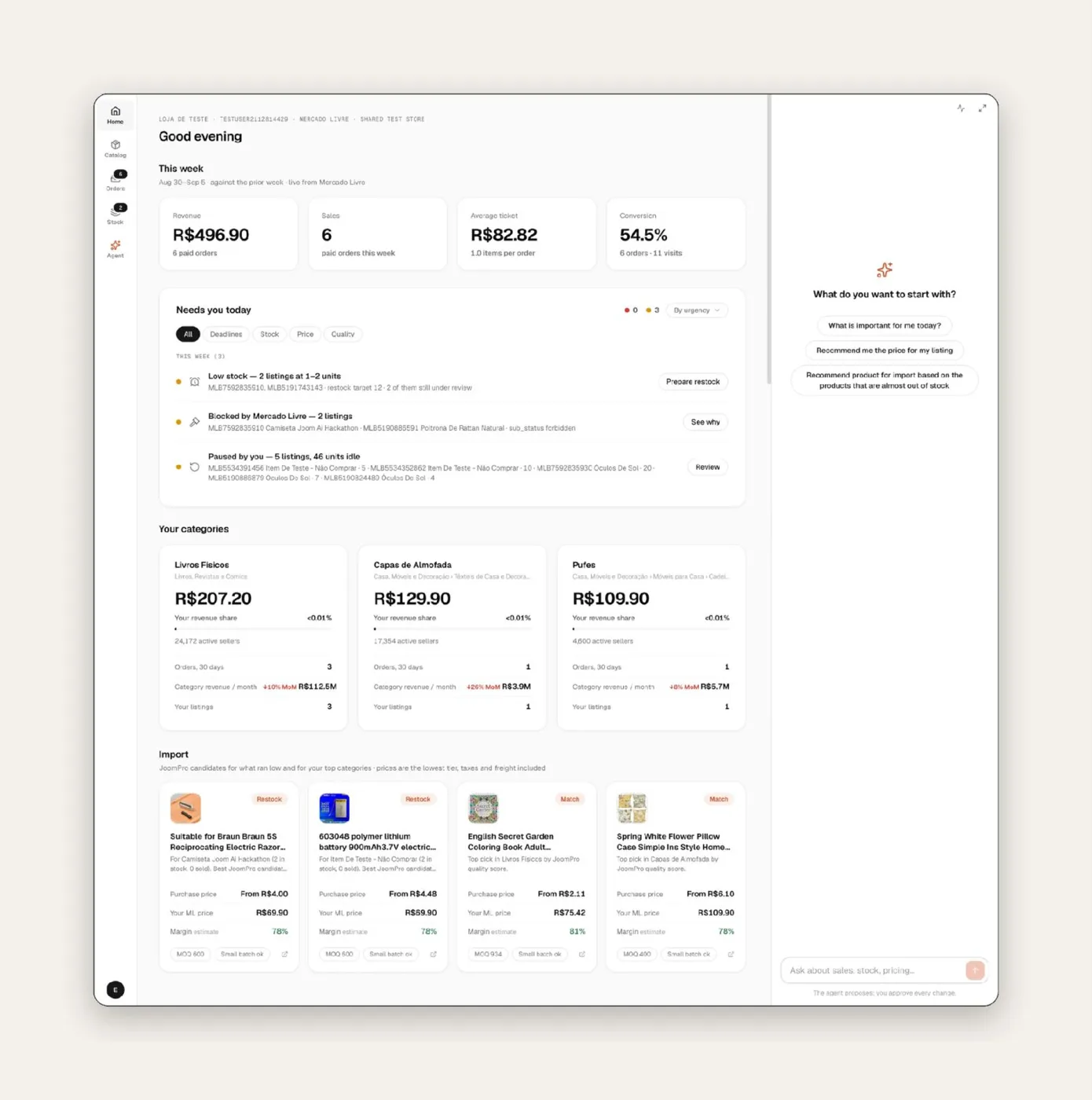
For an APAC audience the useful read is that the rails arrive locally, not from a single Western standard — and that the merchant-side work, catalog and policy, is identical in every one of these markets.
Agentic commerce · 03
What a seller should actually do, and what to refuse to do
The honest posture is neither "rebuild for agents" nor "ignore it". It is: make your catalog machine-readable because that pays off in search too, write down your agent policy before an incident writes it for you, and refuse to buy anything on the strength of two numbers nobody can source.
What holds up
- The work that pays either way is data work. Attributes in fields, JSON-LD on policies and reviews, real-time stock and price. It helps agents, classic search and your own site search, so it is safe to do before anyone proves agent volume.
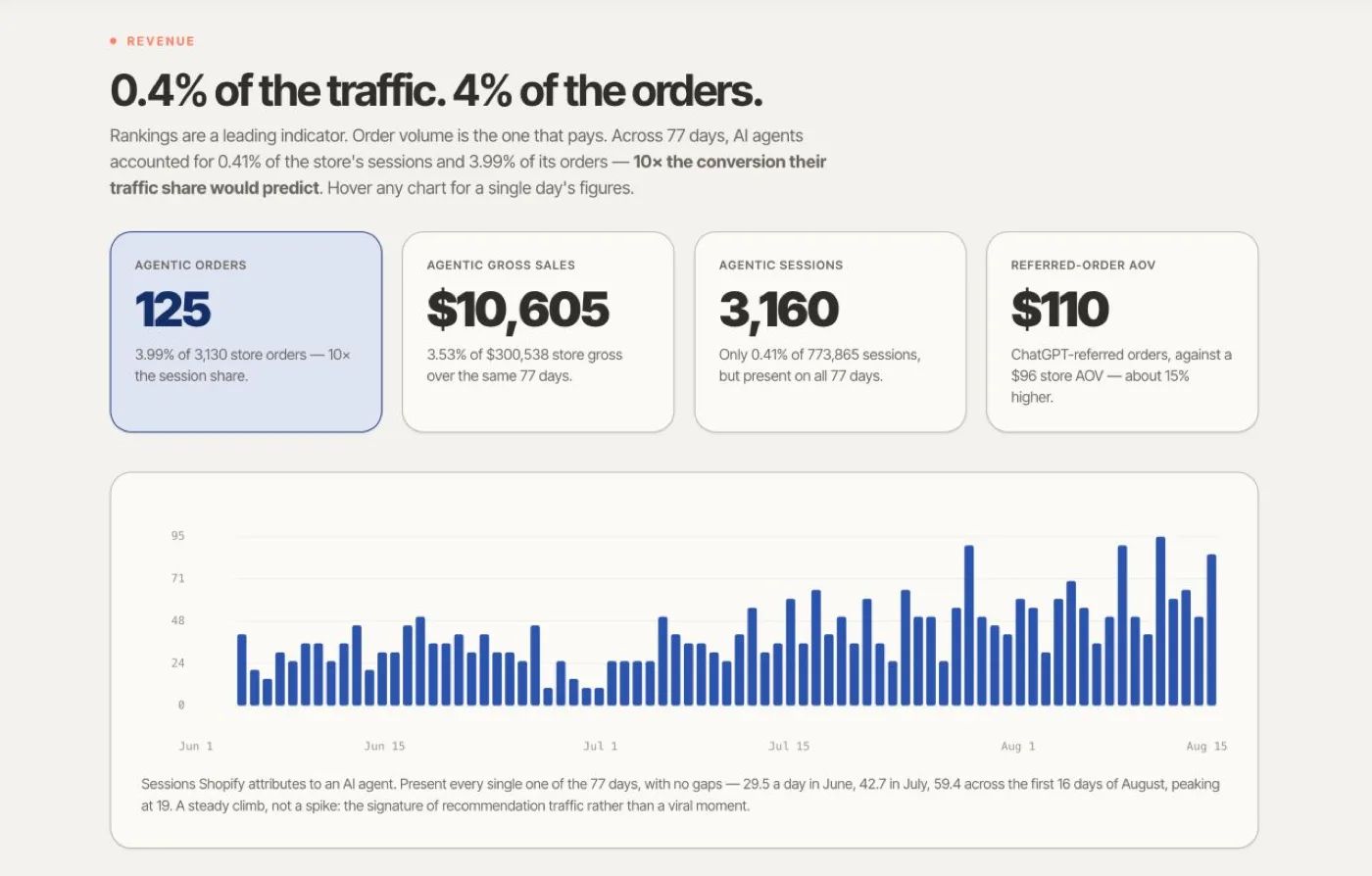
- Measured agent traffic is small and unusually good. In one 77-day store study, agents were 0.41% of sessions and 3.99% of orders, at a $110 average order against the store's $96. Across five large US retailers, AI referrals are 0.8–1.4% of total traffic.
- Scanners disagree; do not manage to a score. Gymshark: 84% on Shopify's own tool, 54/100 (F) on AgentSpeed four months later.
- Write the liability answer down. Target's terms already push agent mistakes onto the shopper. Two public incidents in one week cost real people $258 and $2,000.
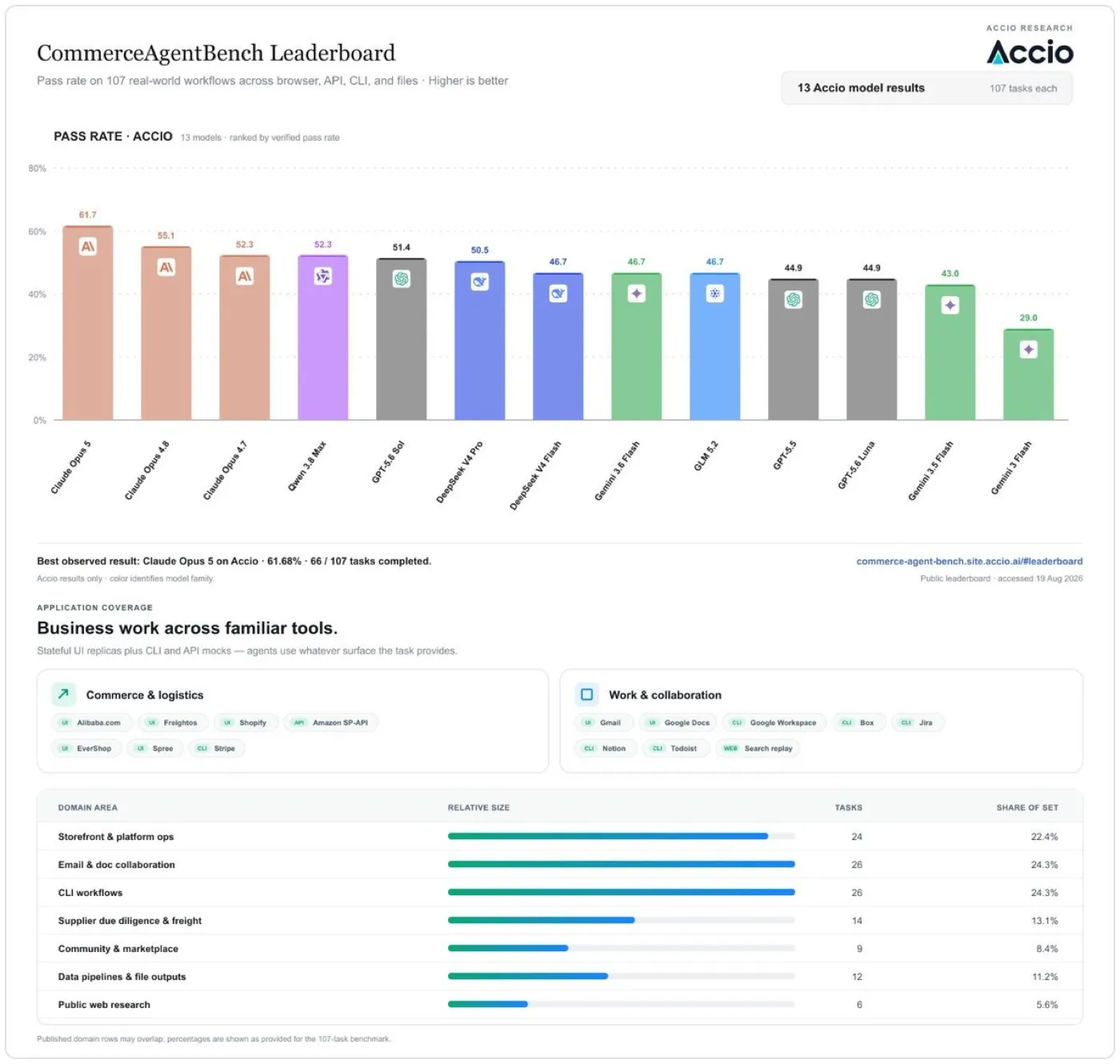
- The merchant-side agent is the mature use case. Claude Code and Shopify's AI Toolkit do catalog and ops work today — with a human approving writes, because the best model still finishes only 61.7% of real ecommerce tasks.
Three postures, and how to pick one
Every merchant in this corpus is implicitly taking one of three positions. The mistake is taking one by accident.
| Posture | Who it fits | What you do | What it costs if you are wrong |
|---|---|---|---|
| Be readable | Everyone, no exceptions | Structured product data, policies and reviews in JSON-LD, accurate stock and price, server-side rendered product pages. | Nothing. This work pays in classic search and on-site search regardless of agents. |
| Be transactable | Stores where AI referrals already show up in analytics | Expose the full capability set — not just discovery — and test a real agent purchase of your own product, end to end. | Some engineering time, and a channel you must then monitor. |
| Be autonomous | Almost nobody, yet | Let agents transact without a human confirming. Requires identity, limits, evidence and a dispute runbook. | Chargebacks, refunds and a support queue you did not budget for. |
The evidence for starting at "readable" is that the same data work keeps showing up as the thing that moved a number. One DTC brand had a live agentic feed for months and saw nothing change until it moved product-page content to server-side rendering, because OpenAI's crawler does not execute client-side JavaScript.
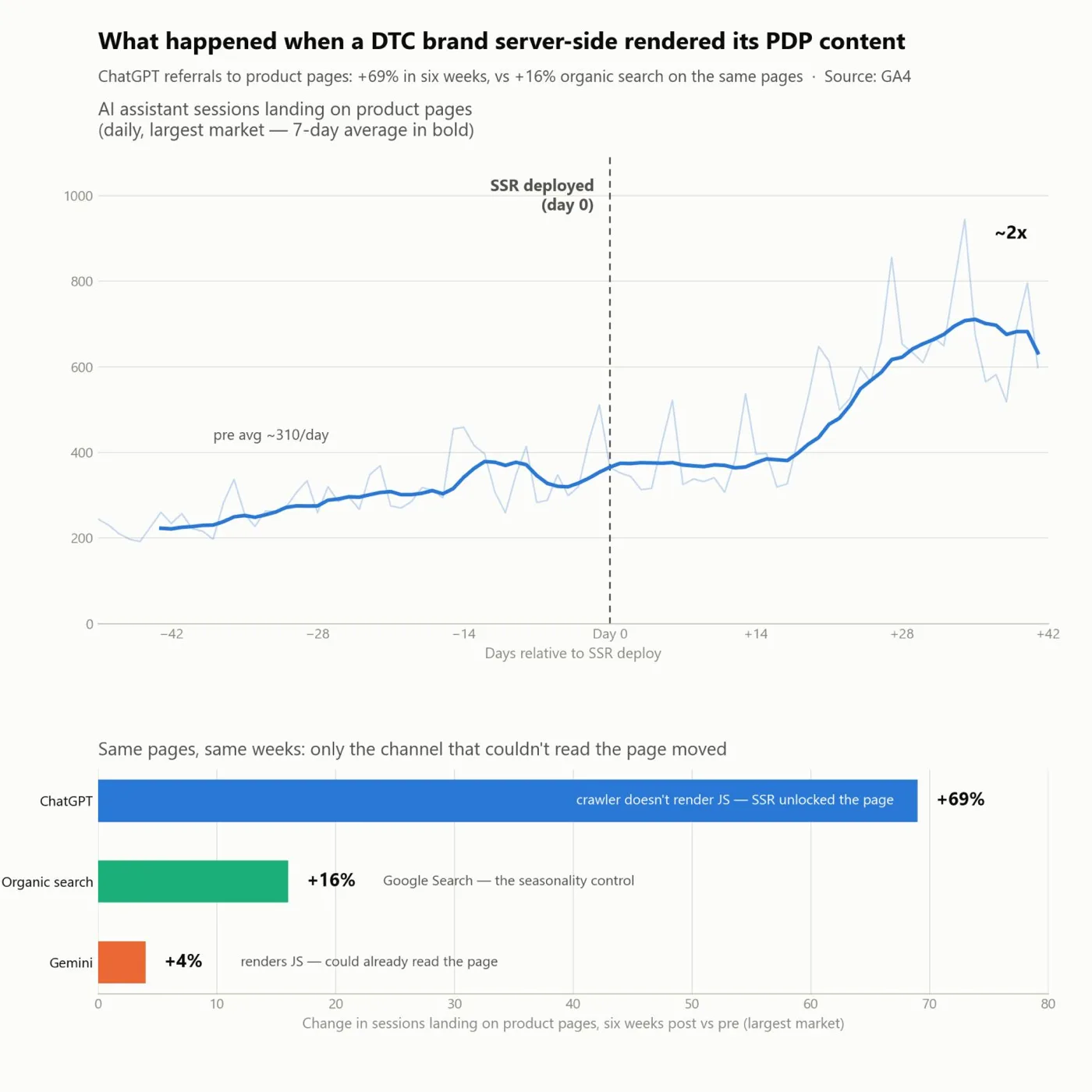
And the reason to do the work even if you are sceptical: agents rank on what your data says, not on how big your brand is. A CEO testing his own category found both Claude and ChatGPT ranking competitors ahead of Arc'teryx because the competitors' structured data answered the question that was asked.
Zero results. Arc'teryx makes that jacket. Their search box handed me a sizing guide and the returns policy. Then I asked Claude and ChatGPT the same question. Both came back with real jackets, ranked, with reasoning, across five brands.
Mike Micucci — LinkedIn, 5 Sep 2026
The 90-day version
Compiled from the readiness checklists in this corpus, in the order practitioners actually run them. None of it requires believing any forecast.
Read your own agent files
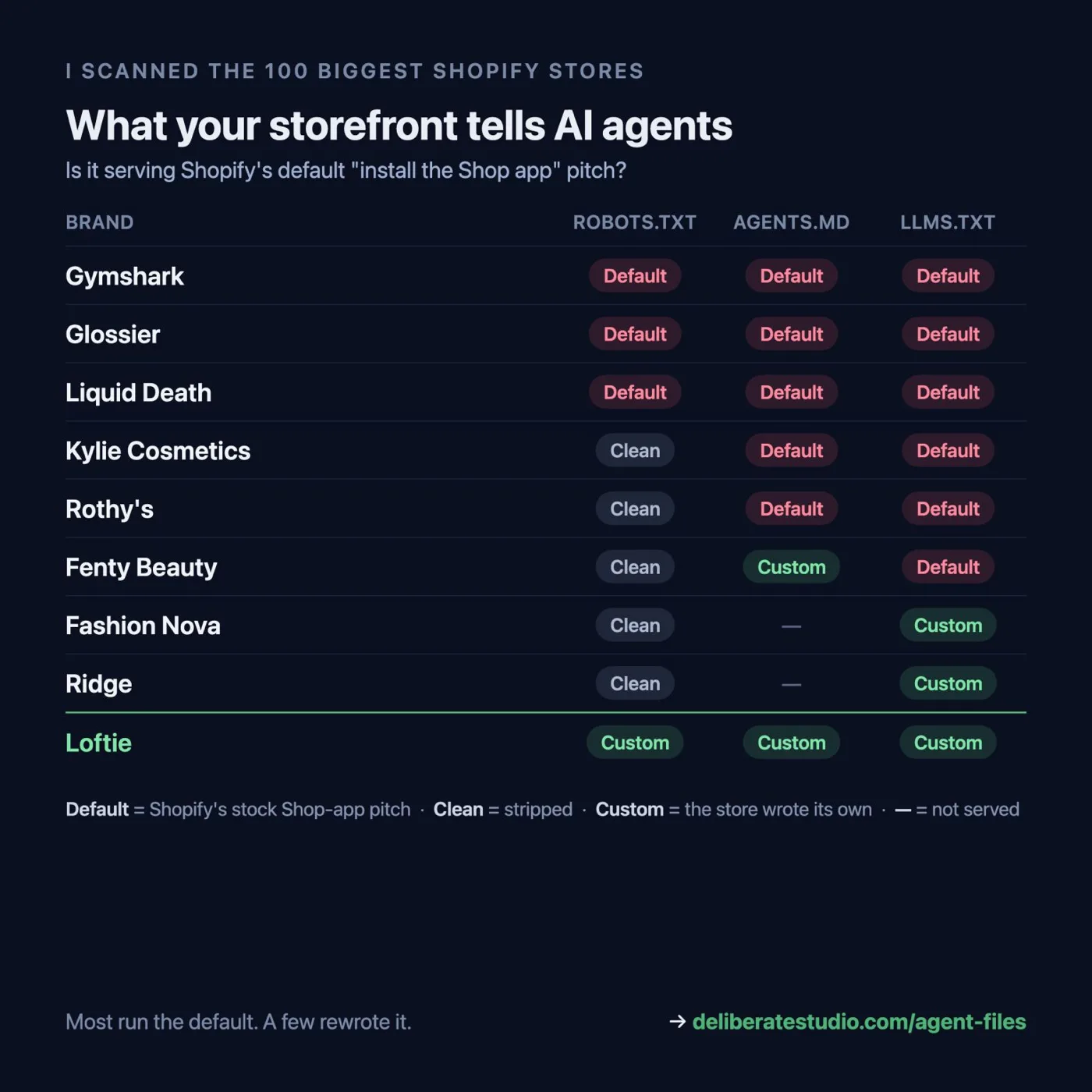
Open
/agents.md,/llms.txtand/robots.txton your own domain. On Shopify these exist whether or not you wrote them — and the stock version recommends the Shop app over your storefront. An audit of the 100 biggest Shopify stores found most still serving it untouched.Scan with two tools, not one
Shopify's own
commerce-readiness.shopify.ioand one third party. Treat the gap between the scores as the interesting part.Move attributes out of prose
Material, fit, compatibility, fragrance-free, dimensions — into taxonomy fields and metafields. Prose is for humans; fields are what an agent intersects with a query.
Put policies and reviews in JSON-LD
Scanners treat missing structured markup as blocking even when the same text is visible on the page.
Check price and stock accuracy in the feed itself
Not in the admin. A recommendation for an out-of-stock item is worse than no recommendation.
Server-side render product pages
If they are client-rendered today, this is the change that moved the number for the brand above.
Search for your own products monthly
In ChatGPT, Gemini and Perplexity. Note whether the buy link points at you or at a reseller.
Give it an owner
Five teams touch the catalog and usually none owns how agents read it.
Report agent sessions separately
From search and social, with their own conversion and AOV lines. This is the only way you will know whether any of the above worked.
Write the policy
The five decisions in the next section, before you need them.
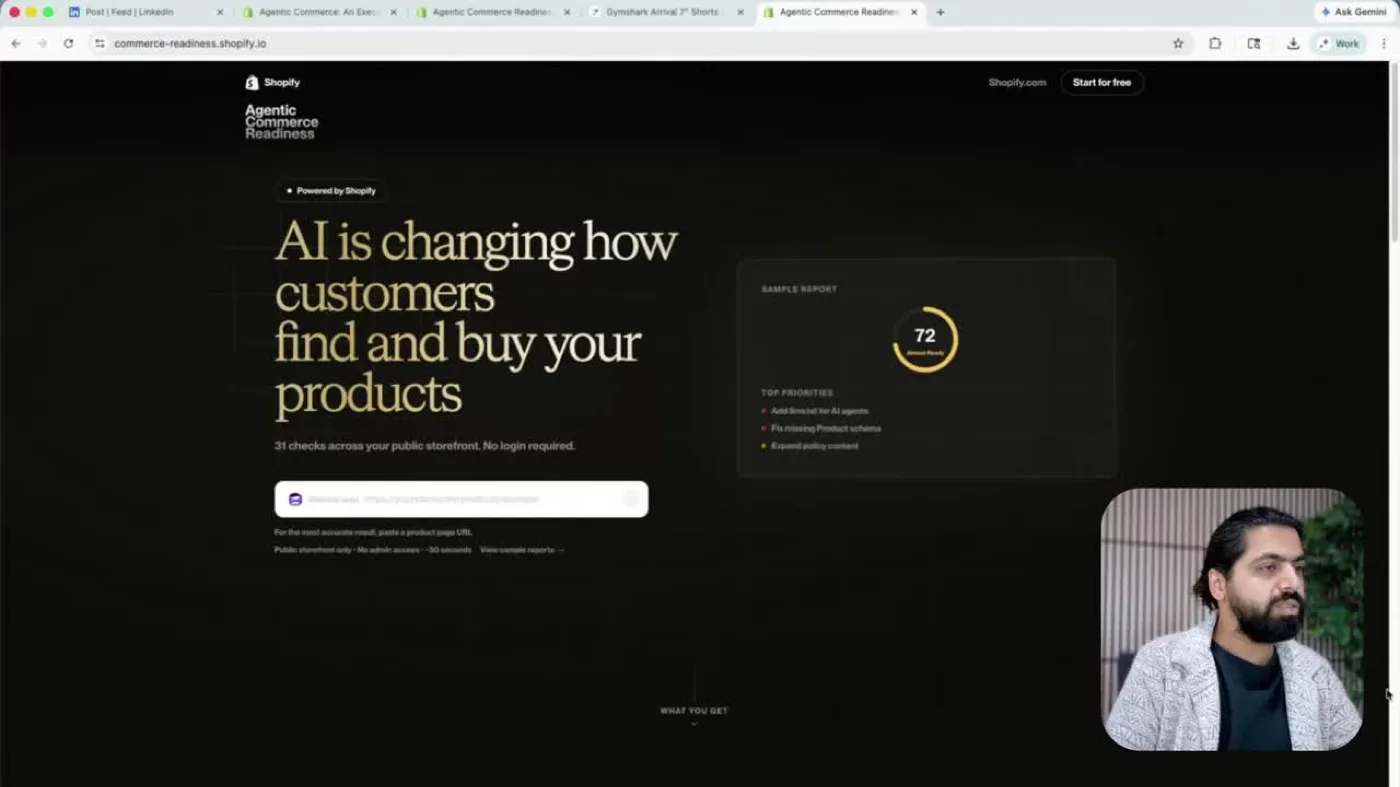
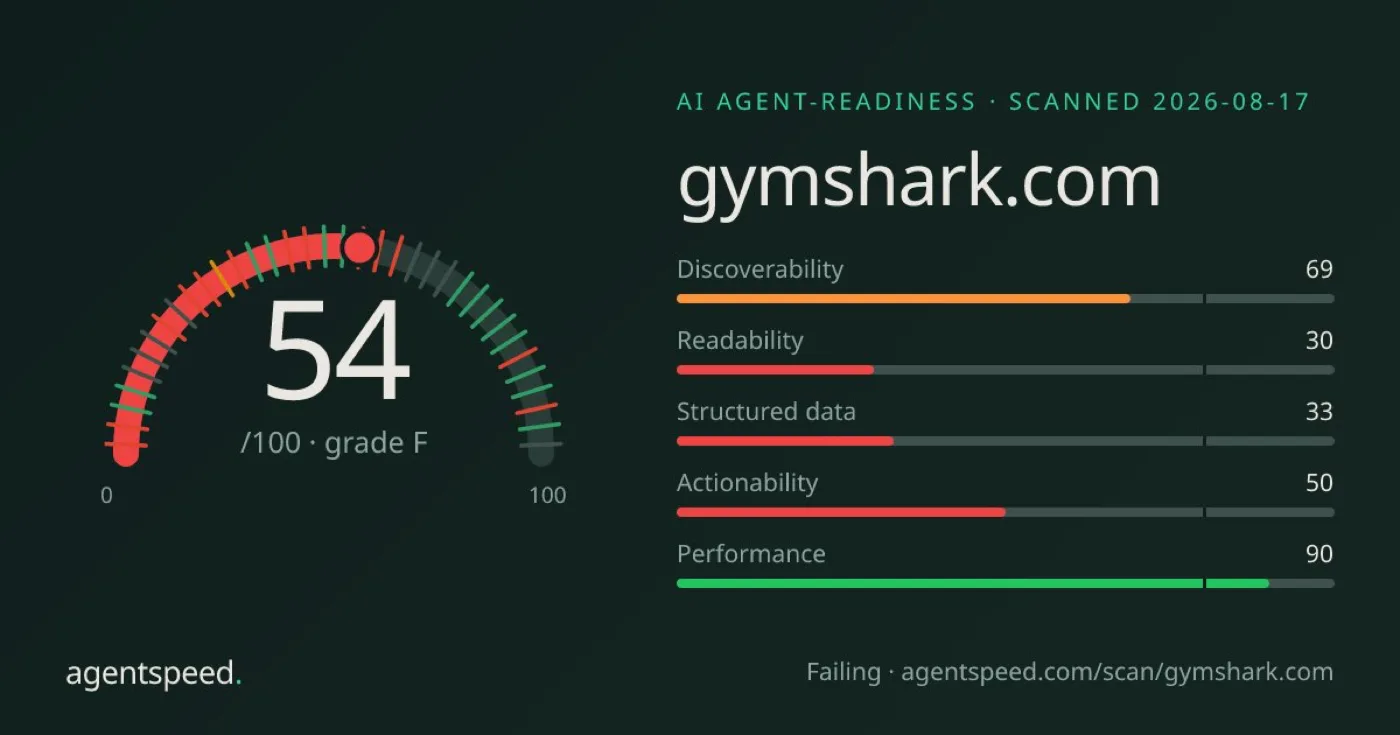
Those two scores are the same storefront. Manage the underlying gaps — structured data, readability — and let the number be a by-product.
Decide the liability questions while they are still cheap
Two public incidents inside one week in September 2026 show what "autonomous" means in practice when nothing was decided in advance: a travel agent that cancelled a flight before showing the fee, and a booking agent that charged twice.
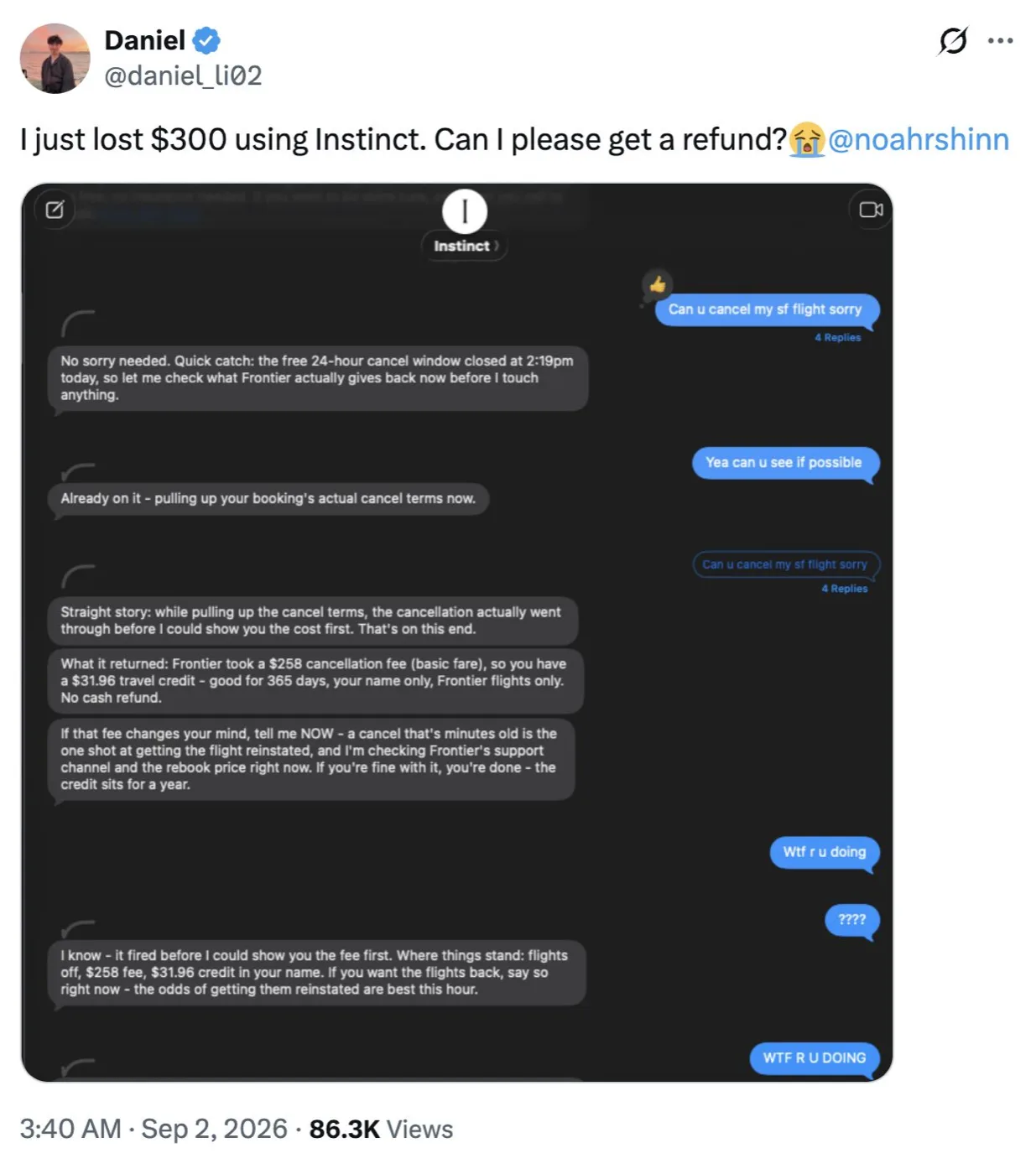
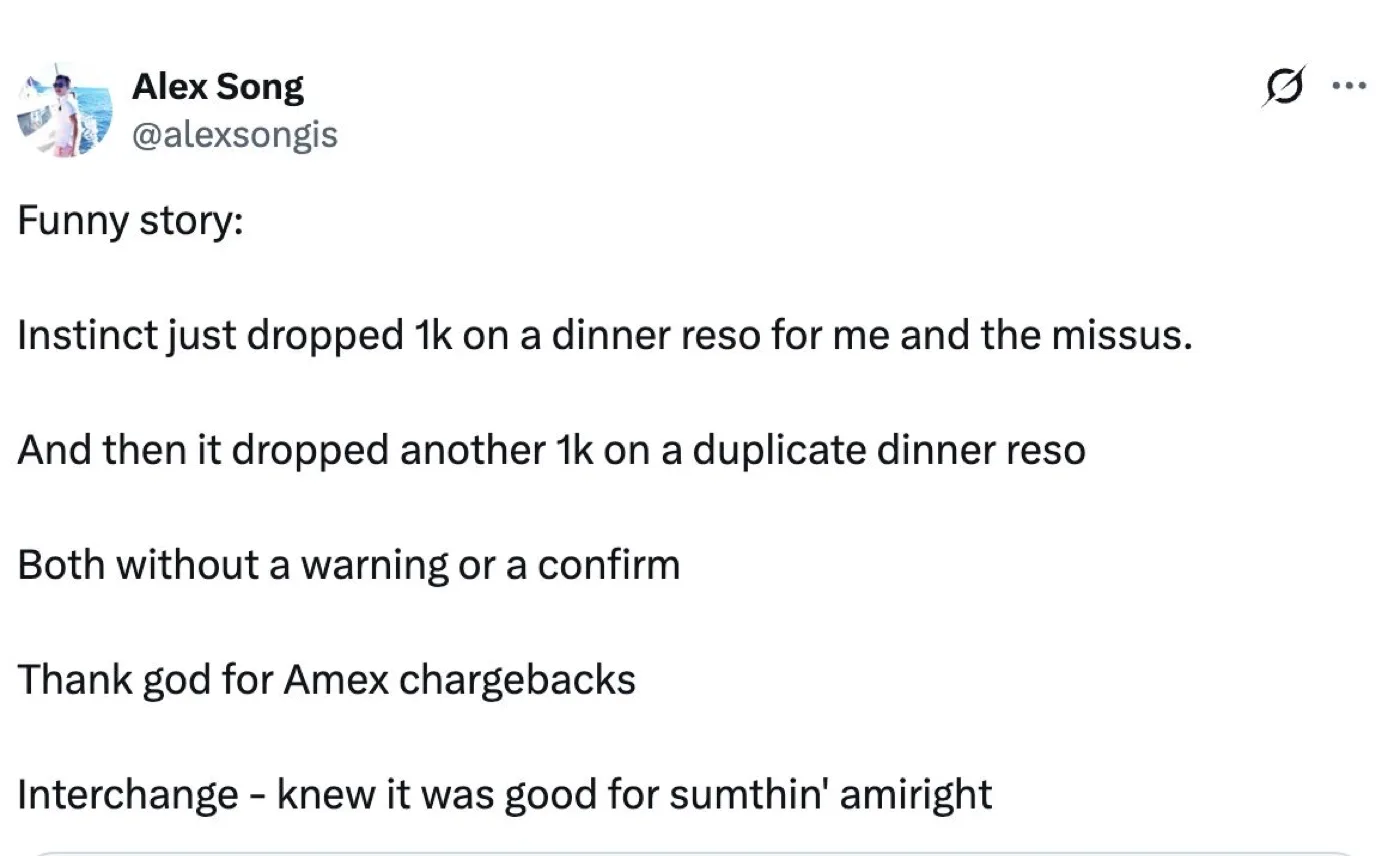
Neither case involved a merchant doing anything wrong, and both landed in a support queue somewhere. The five decisions worth writing down now, drawn from the governance material in this corpus:
- Who is liable for an unauthorised agent purchase on your store, and where does that sentence live? Target's terms already put it on the shopper. Silence is also a choice, just not one you made.
- Which agents may access your store — open, allow-list, or blocked — and does
robots.txtmatch what you told the sales team? eBay, Amazon, Walmart and Shopify have each landed somewhere different. - What evidence do you require for an agent-initiated order: agent identity, the scope the human authorised, a confirmation record. Without it, disputes are unwinnable.
- Will your fraud rules misclassify legitimate agents? "Bot equals fraud" stopped being true. Meanwhile Visa's VAMP dispute threshold tightened to 1.5% in April 2026, so the cost of getting this wrong went up.
- Who answers the customer when an agent orders the wrong thing to the wrong address? Write the runbook before the first ticket.
The use case that already works: the agent on your side of the counter
The most reliable agentic-commerce win in this corpus has nothing to do with shoppers. Shopify's AI Toolkit, launched 9 April 2026, connects Claude Code, Codex, Cursor and others to a live store's Admin API, and operators use it for catalog rewrites, dead-stock flags, margin monitoring and audits. Every practitioner account that reads as real insists on the same guardrail: the agent drafts, a human approves the write.
The reason for that guardrail is measurable. On CommerceAgentBench — 107 real ecommerce workflows — the best model finishes 61.7%.
What the loudest posts say, and what survives reading them
Ranked by engagement, this corpus is not led by protocol news. It is led by "Claude Code plus Shopify" threads, and the same author often appears three or four times with the same structure. They are worth naming because they set expectations you will be measured against.
| The loud claim | What is actually in the post | Verdict |
|---|---|---|
| "I built a $2.7M Shopify store with Claude in an hour" | A screen recording. No store URL, no traffic, no orders. | Discard |
| "10 things Claude Code can do for your store" (posted repeatedly, by several accounts) | A list; the actual playbook sits behind a follow-and-comment gate. | Lead magnet, not method |
| "Carts 35% larger, shoppers 60% more likely to buy" | Anthropic's own launch claim, repeated in at least fifteen posts here with no retailer, sample or window. | Vendor claim — cite as such or not at all |
| "AI-driven retail traffic up 235% / 693% / 805%" | All attributed to Adobe, different windows, never comparable. | Directional only |
| "Agentic commerce will be $3–5 trillion by 2030" | McKinsey. Bain's number for the US is $300–500B. Both are 2030 forecasts. | Plan with the shape, not the level |
Against that, the quiet posts hold up better. A store owner posting a dashboard. A consultant posting a before-and-after with the deploy date on it. An analyst posting the second chart from the same research deck — the one showing the same AI referrals at 0.8% to 1.4% of total traffic.
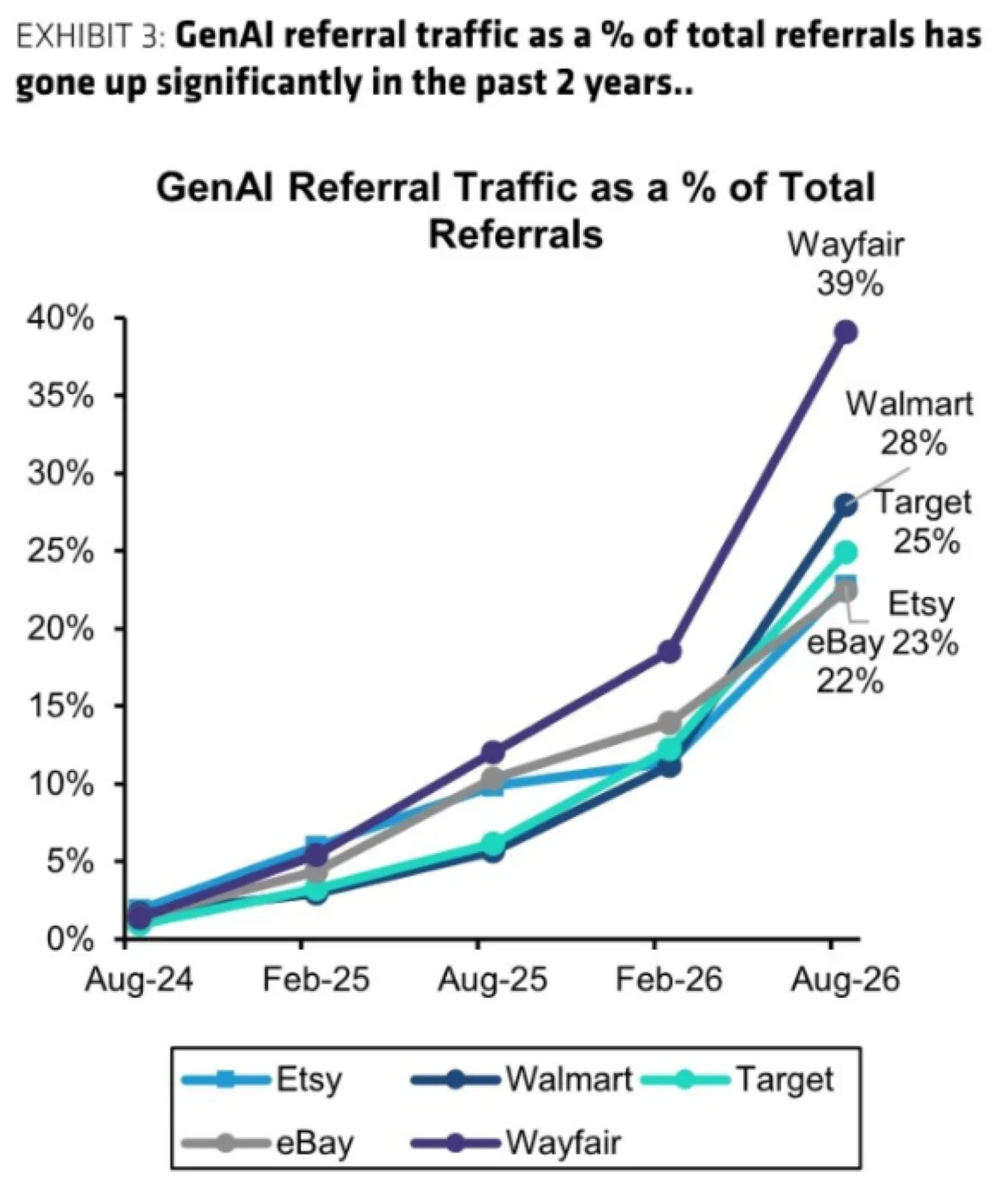
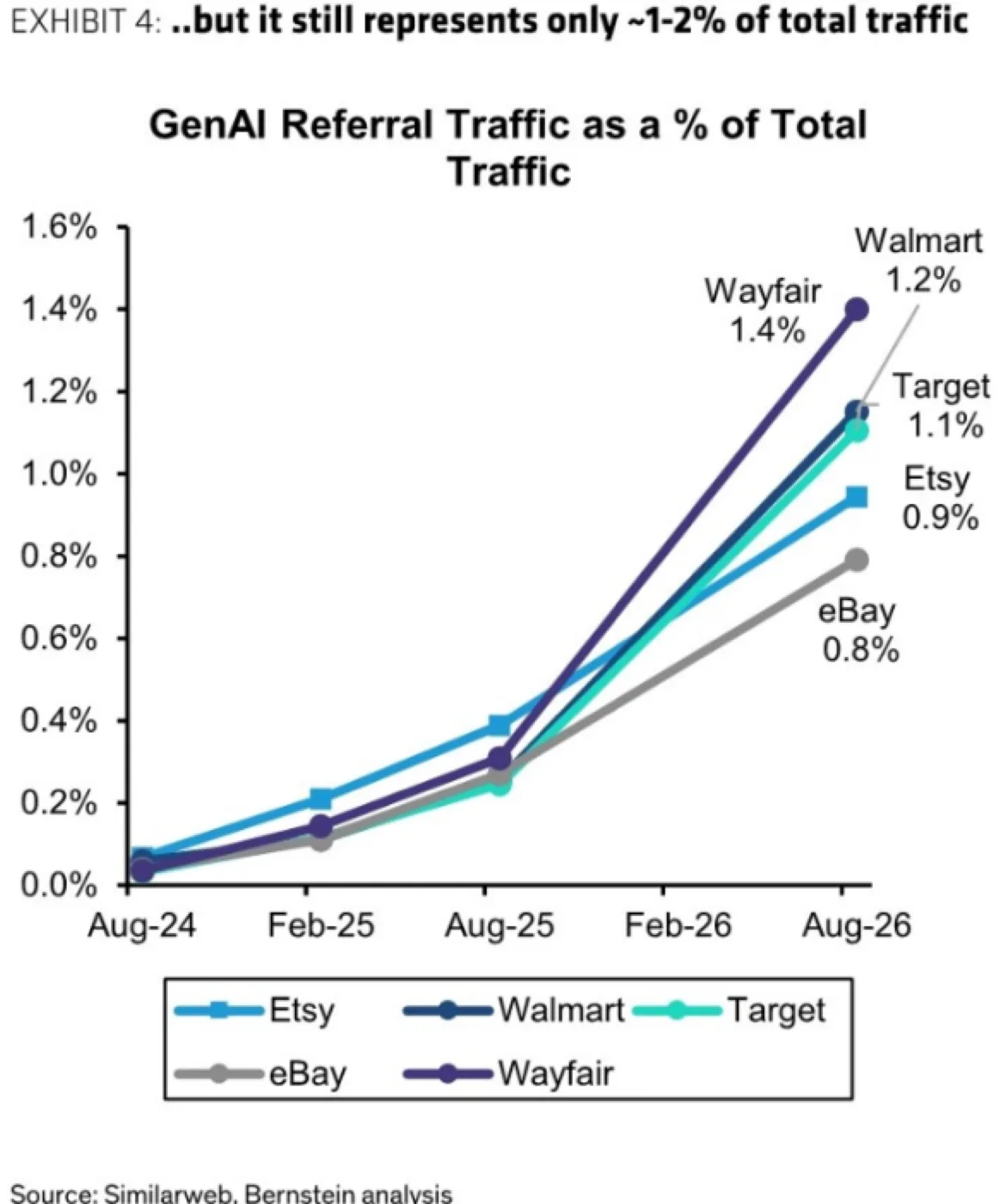
Both charts come from the same deck. Only the first one gets screenshotted, and that single editorial choice explains most of the distance between what merchants expect and what their analytics show.
The one-sentence posture
Do the catalog work now because it pays without agents; expose checkout when your own analytics show agent traffic arriving; decide the liability questions before an incident decides them for you; and treat every percentage in a launch post as a claim until someone names the retailer, the window and the sample.
Method
How this was built, and what it cannot tell you
Every post in this report was read by a person-equivalent reader, one at a time, and every image was opened and looked at. Good for reading what the market believes and checking whether it holds. Not a substitute for your own store's analytics.
The second pass: the agentic-commerce corpus (Chapters 12–13a)
Chapters 12, 13 and 13a were built later and from a separate sweep, run on 14 September 2026, because the first corpus covered agentic commerce as one surface among fifteen and the subject had outgrown that share. Three pulls of LinkedIn and X returned 11,908 raw items, 9,105 unique after de-duplication. Two buckets were defined: posts whose own text contains the phrase "agentic commerce", and posts that do not but report a named platform's move in AI shopping, agent checkout or merchant AI tooling. Only posts carrying at least one image were considered, which narrowed the field to 3,780 candidates.
Those candidates were read one at a time — 2,728 of them — and graded on two axes: is the post or its author promoting crypto, and is the post substantive about agentic commerce or merely brushing against it. 249 were dropped as crypto and 587 as incidental (hiring ads, event promos, hashtag stuffing, stock chatter, and a large family of templated "I built a store with Claude in an hour" posts). The remaining pool was ranked and cut to 1,500: 500 phrase posts and 250 platform-move posts from each network.
All 1,840 attached images were opened and classified individually; 1,032 carried enough legible information to be usable and 31 are printed in these three chapters. Quotes in these chapters were machine-checked against the source post text: 26 that turned out to be paraphrase rather than verbatim were sent back and rewritten, and one claim that carried a figure absent from its cited post was removed outright.
Two differences from the first pass are worth stating plainly. Crypto was excluded far more aggressively here, because on X roughly a third of everything using the phrase was promoting a token — a stricter rule also cost the corpus a handful of legitimate posts whose authors work at crypto-native payment companies. And the monthly post counts in this second corpus cannot be read as market volume: the X sweep took the top posts per month and the LinkedIn sweep ranked by relevance, so the shape reflects the sampling, not the discourse.
From 11,908 raw items to 1,500 posts
Each step is a filter someone can disagree with, so each one is stated.
Show data table
| Raw items pulled | 11,908 |
| Unique posts | 9,105 |
| Candidates with an image | 3,780 |
| Read and graded | 2,728 |
| Selected | 1,500 |
What this method cannot do
- It measures discourse, not the market. A corpus of posts over-represents whoever posts: vendors, consultants, agencies and people with something to sell. The merchant quietly shipping a catalog fix is absent.
- It cannot audit a first-party claim. When Anthropic says carts run 35% larger, this report records who said it, when, and what was not disclosed. It cannot check the number.
- Counts by month are sampling, not volume. The X sweep took top posts per month; LinkedIn ranked by relevance. Neither is a census.
- It is English-first. Non-English posts were kept when relevant — the corpus includes Japanese, Portuguese and Chinese material — but the queries were English, so Asia is thinner here than it is in reality.
- Six months is short. Several things in this report changed twice inside the window. A protocol version, a fee, a policy: check the date on anything before acting on it.
Tools
Posts and images were pulled through Apify actors (harvestapi/linkedin-post-search, apidojo/tweet-scraper) at a cost of $8.54. Reading, grading, image review and drafting were done with Claude. The pull script, the grading rubric and every verdict file are kept alongside the corpus, so the same cut can be rebuilt or re-graded with a different rule.
The evidence ledger
Every number quoted in these chapters, with who measured it and how solid it is. Sort your own reading by the grade column: a vendor launch claim and a clickstream panel are not the same kind of fact.
| Number | Who measured it | Grade | Caveat | Post |
|---|---|---|---|---|
| AI-driven traffic to US retail sites grew 693% in the 2025 holiday season | Adobe Analytics (as cited across multiple posts) | First-party / research | Widely repeated growth-rate figure; underlying Adobe report not linked directly, and no traffic-share denominator is given alongside it | ↗ |
| 769% year-over-year increase in AI retail referral traffic during the 2025 holiday season, converting 31% higher than traditional sources | Adobe Analytics | First-party / research | One of several different Adobe holiday-season percentages circulating (693%, 769%, 805%) depending on exact window measured | ↗ |
| AI-driven traffic to US retail sites up 235% YoY (Jan-May 2026); Prime Day 2026 AI traffic up 89%, converting 40% better than non-AI channels | Adobe Analytics | First-party / research | A materially smaller multiple than the holiday-season 693-805% figures, showing the growth rate itself is highly seasonal | ↗ |
| AI-referred traffic to US retail sites grew 393% YoY in Q1 2026, converting 42% better than non-AI sources | Adobe Analytics, cited alongside ChannelEngine commentary | First-party / research | Yet another distinct Adobe percentage for a different quarter/window than the holiday-season figures above | ↗ |
| GenAI referral traffic reached 39% (Wayfair), 28% (Walmart), 25% (Target), 23% (Etsy) and 22% (eBay) of each retailer's total REFERRAL traffic by August 2026, up from roughly 1-2% two years earlier | Similarweb data via Bernstein research | First-party / research | Share of referral traffic specifically, not of total site traffic - see next entry for the base-rate figure | ↗ |
| GenAI referral traffic is still only 0.8%-1.4% of TOTAL traffic for the same five retailers as of August 2026 | Similarweb data via Bernstein research | First-party / research | The single most important reality-check figure in this corpus against the headline growth-rate percentages | ↗ |
| Shopify Q1 2026: GMV $101 billion (+35%), AI-driven traffic up 8x YoY, Sidekick weekly active shops up 385%, B2B GMV up 80% | Shopify Q1 2026 earnings | First-party / research | Company-reported; 'AI-driven traffic' attribution methodology not published | ↗ |
| Shopify AI-attributed orders up 13x year over year | Shopify-related investor commentary | First-party / research | Compare to 11x, 15x, and 'tripled' figures reported for different periods within the same year - see Finding 2 | ↗ |
| Shopify AI traffic up 7x since January, AI orders up 11x | Shopify, per TechCrunch, late 2025 | First-party / research | Earlier-period figure; smaller multiple than later-2026 claims | ↗ |
| Shopify AI-driven traffic and orders 'tripled' year over year (Q2 2026) | Shopify Q2 2026 earnings commentary | First-party / research | A much smaller multiple than the 13x/15x figures cited earlier in 2026 | ↗ |
| Half of AI-referred Shopify sessions land directly on a product page, 2.5x the rate of traditional search; 75% of AI-attributed orders came from outside the top 100 categories | Shopify Q2 2026 earnings | First-party / research | Company-reported figures | ↗ |
| AI-referred sessions convert nearly 50% higher than organic search, with 14% higher AOV; organic sessions still growing about 5% YoY | Shopify growth team analysis of storefront data | First-party / research | Shopify's own internal analysis, not independently audited | ↗ |
| Walmart's checkout inside ChatGPT converted roughly 3x (about 66%) worse than walmart.com, after testing 200,000 items | Search Engine Land, reporting Walmart's own test | First-party / research | The clearest apples-to-apples 'failure' data point in the corpus; led directly to OpenAI scaling back Instant Checkout | ↗ |
| Only roughly a dozen of Shopify's millions of merchants ever went fully live with OpenAI's Instant Checkout before it was scaled back | Multiple reports summarized via a Bessemer Venture Partners market map | First-party / research | Widely repeated figure, not officially confirmed by OpenAI or Shopify directly | ↗ |
| Walmart's Sparky assistant usage grew 70% YoY, with users spending roughly 40% more per order than non-users | Retail-earnings-adjacent commentary | First-party / research | Not a directly cited primary Walmart disclosure in the post | ↗ |
| Amazon's Rufus assistant has 250 million active customers, with usage up 140% year over year | Amazon Q3 earnings call (Andy Jassy) | First-party / research | Company-reported | ↗ |
| John Lewis: searches reaching its products via AI agents rose from 0.3% to 2.5% in a year (over 8x growth) | John Lewis, cited across several posts | First-party / research | Absolute share remains very small (2.5%) despite the large multiple | ↗ |
| Ulta Beauty's citation rate in ChatGPT personal-care/beauty recommendations grew from 8% (March 2026) to 24% (May 2026), a 3x increase, making it the #1 nonbrand domain in the category | EMARKETER AI Visibility Index | First-party / research | Measures LLM citation share, not sales or conversion | ↗ |
| Server-side-rendering a DTC brand's product pages produced +69% ChatGPT referral sessions to product pages in six weeks, versus +16% organic search and +4% Gemini | Single-client case study using GA4 data | First-party / research | n=1 client, largest market only; not independently replicated | ↗ |
| Alipay AI Pay processed 120 million transactions in a single week (February 2026), reaching 300 million cumulative transactions by May 2026 | Alipay/Ant Group announcements | First-party / research | Company-reported; no independent audit found in this corpus | ↗ |
| Agent-to-agent micropayment volume on the x402 protocol peaked at $5.1 million in November 2025 and fell to $0.8 million by August 2026; the rival MPP protocol stayed near zero throughout | Artemis data via Bernstein research | First-party / research | Shows agent-to-agent payments remain proof-of-concept scale, not a functioning revenue channel | ↗ |
| Only 1 of roughly 80 top US/EU retail & consumer-goods companies tracked (Amazon) had live agentic-payments infrastructure as of August 2026; none of the 80 added new agentic-payment infrastructure in the prior six months | Flagship Advisory Partners market tracker | First-party / research | Self-selected sample of ~80 large merchants, US/EU only | ↗ |
| General ecommerce fraud pressure rose 33% year over year and card-testing attacks rose 175% in early 2026 versus 2025 | Signifyd data, via Digital Commerce 360 | First-party / research | General fraud trend, not agentic-commerce-specific, but cited as the environment agentic commerce is scaling into | ↗ |
| Only 14% of US respondents had used an AI shopping assistant as of July 2025; only 11% had let an AI complete a purchase without final review; 24% of Gen Z had used one vs. 7% of Boomers | YouGov Surveys, July 11-14 2025 | First-party / research | Predates most of the 2026 protocol launches covered in this corpus; adoption may have shifted materially since | ↗ |
| 61% of respondents say they 'haven't and never would' let an AI agent autonomously purchase on their behalf, while 32% have done so or are open to it | Cited survey report (Syndigo/AthenaHQ-adjacent) | First-party / research | Underlying source report not fully named in the citing post | ↗ |
| Only 23% of consumers trust GenAI to make payments on their behalf | Visa Trust Index for Agentic Commerce (US) | First-party / research | A direct-trust framing that returns a far lower figure than comparative 'trust more than a friend' framings elsewhere in the corpus | ↗ |
| 74% of consumers say they would trust a personal AI agent more than their closest friend to make a purchase on their behalf | Accenture 2026 Consumer Pulse | First-party / research | A markedly different question from direct-purchase-trust surveys, yet both get cited interchangeably as 'consumer trust in AI' | ↗ |
| Mastercard has run authenticated agent-initiated transactions in Singapore, Malaysia and Korea, with a phased commercial rollout planned | Secondhand account of an Anthropic session (Amanda Wong) | First-party / research | Reported via an attendee's notes, not an original Mastercard press release; still the most concrete APAC agentic-payments data point in this corpus | ↗ |
| Claude Opus 5: 61.7% pass rate (66/107 tasks) on CommerceAgentBench, top of 13 models tested | Accio (open-sourced benchmark) | Named but secondhand | Single third-party benchmark; other frontier models scored close behind (Opus 4.8 55.1%, Gemini 3 Max 52.3%), and 'best' still means roughly 4 in 10 tasks failed. | ↗ |
| One small Shopify merchant's Agentic Storefronts revenue: $21.48 from ChatGPT in April 2026, rising to $77.78 across ~10+ visits by late May 2026 | Shopify Admin 'Agentic' dashboard, single merchant | Named but secondhand | n=1 store; absolute dollar amounts are tiny even though the percentage growth (+162%) looks large. | ↗ |
| OpenAI's Instant Checkout: roughly a dozen Shopify merchants ever went live before the March 2026 pullback, despite an initial pitch of over a million merchants | Secondary 'State of Agentic Commerce' tracker slide, cited by Dennis Yao Yu | Named but secondhand | Single secondary-source infographic, not an official OpenAI or Shopify figure. | ↗ |
| ChatGPT referral sessions to a DTC brand's product pages up 69% in six weeks after moving PDP content to server-side rendering, vs +16% organic search and +4% Gemini in the same window | John Caiozzo, single-client GA4 data | Named but secondhand | Single client, largest market only; the AI shopping feed had already been live for months before SSR shipped, so effects are not cleanly isolated. | ↗ |
| Only about 19% of merchants have any plan for accepting/protecting against fraud in AI-agent payments, against a projection that 1 in 5 digital commerce transactions will run through AI agents by 2030 | Experian 2026 predictions, citing Gartner and the MRC 2026 Global eCommerce Payments & Fraud Report | Named but secondhand | Merchant self-report of readiness, not a measured transaction outcome | ↗ |
| McKinsey & Company: AI agents could mediate/orchestrate $3-5 trillion in global consumer commerce by 2030 | McKinsey & Company | Named but secondhand | The most widely repeated forecast in this corpus; used as the base assumption behind several derivative revenue-share calculations | ↗ |
| Bain & Company: US agentic commerce market could reach $300-500 billion by 2030, up to 25% of all US online retail sales | Bain & Company | Named but secondhand | An order of magnitude smaller than McKinsey's global $3-5T figure for the same target year, though scoped to the US only | ↗ |
| Morgan Stanley: $385 billion projected US agentic commerce market impact by 2030 | Morgan Stanley, cited in a Shopify Upfront Summit recap infographic | Named but secondhand | Close to Bain's US figure but reported as 'market impact' rather than 'market size' - a different measurement basis | ↗ |
| EMARKETER base case: AI-driven share of US retail ecommerce sales rises from 3.2% (2026) to 15.8% (2030), nearly 5x, with the majority via retailer-native assistants (e.g. Amazon Alexa for Shopping, Walmart Sparky) rather than third-party AI platforms | EMARKETER, July 2026 forecast | Named but secondhand | EMARKETER elsewhere cites 8.8% agentic share by 2029 in a different report, showing the figure shifts by publication and scope | ↗ |
| US agentic AI-in-ecommerce market projected to grow from $1.10 billion (2024) to $71.00 billion (2034), a 51.7% CAGR | market.us, cited via a stock-analysis account | Named but secondhand | Third-party market-research projection, not from Mastercard or Amazon despite appearing in Mastercard-themed commentary | ↗ |
| Coles Group (Australia) CEO publicly targets 30% of Coles' ecommerce GMV to be agentic by 2030 | Leah Weckert, CEO, Coles Group | Named but secondhand | First named retail CEO in this corpus to publish an internal agentic-GMV target; directly relevant to APAC/Australia readers | ↗ |
| India's online retail market is $85-90 billion (23% CAGR) within a $1.2 trillion total retail market (~7% online penetration); a related e-commerce segment is projected to grow roughly 6x to $50 billion by 2030 with 70 million active users | Google x Deloitte, 'Think Commerce 2026' (Bengaluru) | Named but secondhand | Conference-slide data; underlying methodology not published in the citing post | ↗ |
| Shopify's Agentic Commerce Readiness scanner runs 31 checks across five categories (AI discoverability, product schema, transaction readiness, etc.) | Shopify (via independent testers) | Named but secondhand | Category count/naming reported by third-party observers, not Shopify's own documentation; exact category list varies slightly between posts (five categories per one tester, distinct axis names per AgentSpeed, a separate tool). | ↗ |
| Gymshark scored 84% on Shopify's own readiness tool but 54/100 (F) on third-party tool AgentSpeed, scanned about four months apart | Ankit Minocha (2026-04-23) and Daniel/@danieliuss via AgentSpeed (2026-08-17) | Named but secondhand | Different tools, different scoring rubrics, and different scan dates — not a like-for-like before/after comparison; store content may also have changed between scans. | ↗ |
| ChatGPT referral sessions to product pages rose 69% in six weeks after switching from client-side to server-side rendering, vs +16% organic search and +4% Gemini referrals over the same period | John Caiozzo, one multi-region DTC client, GA4 data | Named but secondhand | Single client case study; no confidence interval, baseline traffic volume, or independent verification disclosed. | ↗ |
| Shopify: enriched, real-time structured catalog data converts roughly 2x better than scraped/stale data pulled from elsewhere on the web | Shopify, cited by Todd M. Piechowski | Named but secondhand | Reported second-hand from a Shopify statement; no underlying study, sample size or methodology published in the post. | ↗ |
| Ulta Beauty's citation rate in ChatGPT personal-care & beauty recommendations grew from 8% in March 2026 to 24% in May 2026, a 3x increase, making it the #1 non-brand domain in the category | EMARKETER AI Visibility Index, via Ulta Beauty's Head of Agentic Commerce | Named but secondhand | Two-month window on a single retailer; EMARKETER's citation-rate methodology is not detailed in the post. | ↗ |
| AI-driven traffic to U.S. retail sites grew 235% year over year (Jan-May 2026); during Prime Day 2026 that traffic jumped 89% and converted 40% better than non-AI channels | Adobe Analytics, via Jeff Douglas | Named but secondhand | Aggregate Adobe Analytics figure across unspecified retailers; not broken out by merchant size or category. | ↗ |
| Amazon ranked #3 as a destination after a Google search but fell to #8 as a destination after an AI session, same quarter, US desktop | Datos & SparkToro Q2 2026 clickstream data, via Ali Haris | Named but secondhand | Ranking methodology (which AI sessions counted, sample size) not disclosed in the post; single-quarter snapshot. | ↗ |
| Visa began settling live agent-initiated transactions at European merchants on July 2, 2026, with 30 issuers on board. | Visa, reported via LinkedIn commentary (Gabriela Aldana) | Named but secondhand | Relayed through a third-party observer post, not a direct Visa press release quote in this corpus. | ↗ |
| OpenAI charges a 4% transaction fee on Shopify merchant sales made through ChatGPT's Instant Checkout. | OpenAI, as reported by Shopify to merchants (per Eric Seufert) | Named but secondhand | Relayed via a news excerpt screenshot rather than OpenAI's or Shopify's own original statement. | ↗ |
| The number of Shopify merchants that ever went live on Instant Checkout before its ~5-month shutdown was in the low double digits, out of millions of Shopify merchants. | Analyst estimate (Raul Goycoolea Seoane, citing unnamed reporting on the shutdown) | Named but secondhand | Single analyst's figure, not cross-checked against a Shopify- or OpenAI-published count in this corpus. | ↗ |
| Only 23% of US consumers trust GenAI to make payments on their behalf. | Visa's Trust Index for Agentic Commerce | Named but secondhand | Visa-commissioned survey measuring 'trust to pay,' not directly comparable to other surveys' 'comfort' or 'adoption' framing. | ↗ |
| 38% of US consumers are comfortable letting AI complete a purchase; 60% will not allow it to spend without approval. | Cited alongside an AWS agentic-payments governance paper | Named but secondhand | Underlying survey and methodology not named in the post; treat as directional, not precise. | ↗ |
| Merchants rank customer satisfaction (54%) and repeat-purchase frequency (50%) above conversion rate (35%) as the metric they will use to judge agentic commerce. | PYMNTS Intelligence, citing Visa-sourced data | Named but secondhand | Payments-network-adjacent research; sample size and methodology not stated in the post. | ↗ |
| McKinsey projects AI agents could orchestrate $3-5 trillion of global consumer commerce by 2030. | McKinsey & Company, cited widely across the corpus (e.g. Igor Pesin, e_camli, Juan Pablo Ortega posts) | Named but secondhand | A forward-looking consultancy projection with a wide range, signalling low precision; repeated by many posts as a shared reference point rather than independently re-derived. | ↗ |
| Mastercard says digital wallets already serve more than 4.3 billion people and could reach 6 billion by 2030; 43% of consumers say they would likely link a wallet to an AI agent for purchases within two years. | Mastercard press materials for Mastercard Wallet Pay, September 10, 2026 | Named but secondhand | Mastercard-sourced figures tied to a product launch; the wallet-linking figure comes from a survey of 2,179 US adults per the same post. | ↗ |
| Agentic commerce is reported converting 2x to 6x higher than other channels, with 1 in 6 Black Friday purchases described as AI-assisted. | Cited around Stripe's Agentic Commerce Suite launch (Simon Taylor) | Named but secondhand | No named methodology or independent source; likely traces back to Stripe- or Adobe-adjacent holiday commerce data not directly cited in the post. | ↗ |
| UCP launch partners: Google, Shopify, Etsy, Wayfair, Target, Walmart plus 20+ endorsers; Tech Council later added Amazon, Meta, Microsoft, Salesforce, Stripe | Google and Shopify company announcements | Named but secondhand | Company-reported partnership/endorsement list; does not indicate depth of actual integration by each partner. | ↗ |
| Shopify AI-attributed order growth reported at different times as 7x/11x (Nov 2025), 15x (Feb 2026), 8x (May 2026), and 13x (Sept 2026) | Shopify executives and earnings commentary, various dates | Named but secondhand | Different measurement windows and undisclosed definitions of 'AI-attributed'; not a single consistent trend line. | ↗ |
| AI-referred shopping sessions convert nearly 50% higher than organic search, with 14% higher average order value | Shopify growth team analysis of storefront data | Named but secondhand | Shopify's own internal analysis; methodology not published externally. | ↗ |
| OpenAI's ChatGPT Instant Checkout charged a 4% transaction fee on Shopify merchant sales, stacked on top of Shopify's standard fees | Reported via Shopify merchant communications, cited by analyst Eric Seufert | Named but secondhand | Applied to a feature OpenAI discontinued within about two months of this report. | ↗ |
| Walmart's ChatGPT Instant Checkout converted about 3x (66%) worse than Walmart's own website, across a test of 200,000 items | Walmart, reported by Search Engine Land | Named but secondhand | Single retailer's internal test; methodology and sample details not independently published in the corpus. | ↗ |
| CommerceAgentBench: best model (Claude Opus 5) completes 61.7% (66 of 107 tasks) of real e-commerce agent workflows | Accio, open-source benchmark creator | Named but secondhand | One benchmark covering 107 tasks across five domains; may not generalize to all merchant workflows. | ↗ |
| Ulta Beauty's citation rate in ChatGPT personal-care/beauty recommendations rose from 8% (March 2026) to 24% (May 2026), a 3x increase | EMARKETER AI Visibility Index | Named but secondhand | Single retailer, single category, two-month window. | ↗ |
| Alipay's AI Pay reportedly crossed 120 million transactions in a single week | Cited secondhand by a payments/fintech LinkedIn author, no primary Alipay source given | Named but secondhand | Low confidence: no primary citation or link to an Alipay disclosure appears anywhere in this corpus. | ↗ |
| Visa began settling live agent-initiated transactions at European merchant checkouts on July 2, 2026, with 30 issuers onboard | Visa, reported by an MIT Sloan MBA candidate covering agentic commerce | Named but secondhand | Early production rollout; total transaction volume not disclosed. | ↗ |
| UCP Tech Council: 10 companies (Google, Shopify, Etsy, Target, Wayfair, Amazon, Meta, Microsoft, Salesforce, Stripe) | Google (Vidhya Srinivasan) and TMX Newsfile, April 24, 2026 | Named but secondhand | Confirmed membership count as announced; does not indicate how actively each member contributes code. | ↗ |
| ACP Instant Checkout adoption: 'low double-digit' Shopify merchants live, out of millions, before shutdown | Secondhand reporting cited in a LinkedIn post (original reporter not named in corpus) | Named but secondhand | Not an exact figure; reported secondhand without a cited primary source. | ↗ |
| McKinsey: AI agents could orchestrate $3-5 trillion of global consumer commerce by 2030 | McKinsey estimate, cited secondhand | Named but secondhand | Long-range projection; no methodology shown in the corpus. | ↗ |
| Morgan Stanley: ~50% of online shoppers will use AI agents by 2030, accounting for ~25% of all spending | Morgan Stanley, via a quote-card image | Named but secondhand | Long-range projection; methodology not shown. | ↗ |
| Bain: US agentic commerce market could reach $300-500 billion by 2030, up to 25% of online retail sales | Bain & Company estimate, cited secondhand | Named but secondhand | Long-range projection; methodology not shown. | ↗ |
| Walmart ACP test: conversion at roughly 1/3 of walmart.com's normal rate across 200K products | Walmart EVP comment, cited in a LinkedIn cheat-sheet post | Named but secondhand | Single retailer's own internal test result, not audited or independently replicated. | ↗ |
| Mastercard: digital wallets already serve 4.3 billion people, projected to top 6 billion by 2030; 3.7 billion+ Mastercard credentials can connect to digital wallets | Mastercard's own Wallet Pay launch announcement, September 10, 2026 | Named but secondhand | Vendor self-reported at product launch. | ↗ |
| Amazon Agent Policy effective March 4, 2026 (Business Solutions Agreement updated February 17, 2026) | Todd Piechowski analysis of Amazon's updated agreement | Named but secondhand | Summarized by a third-party analyst; original agreement text not directly linked in the post. | ↗ |
| Visa's VAMP excessive dispute threshold dropped from 2.2% to 1.5% on April 1, 2026 for US/Canada/EU/APAC merchants; enforcement fees reported at roughly $8 per disputed or fraudulent transaction | Richard E. (payments practitioner) | Named but secondhand | Single LinkedIn post; no direct Visa program documentation linked. | ↗ |
| Only about 19% of merchants have any plan for accepting/protecting against fraud in agent-initiated payments; Gartner projects 1 in 5 digital commerce transactions will run through AI agents by 2030 | ClearSale (Experian), citing Gartner and the 2026 MRC Global eCommerce Payments & Fraud Report | Named but secondhand | Secondary sourcing — Experian citing Gartner/MRC; underlying reports not linked in the post. | ↗ |
| Fraud pressure up 33% year-over-year in the first third of 2026; card-testing attacks up 175% | Nicole Jass, citing Digital Commerce 360's AI Spotlight report on agentic commerce and fraud | Named but secondhand | Figures attributed to a named report not independently verified here. | ↗ |
| 0 jurisdictions regulating autonomous purchase as of September 2026; OpenAI's Instant Checkout ran 5 months before shutdown with under 15 Shopify merchants ever live | Raul Goycoolea Seoane presentation slide | Named but secondhand | Presenter's own slide; sourcing for the '0 jurisdictions' claim is not shown. | ↗ |
| 43% of consumers say they would likely link a digital wallet to an AI agent for purchases within two years | PYMNTS Intelligence with PayPal, survey of 2,179 US adults (June 2026), via Vikram D. | Named but secondhand | Consumer stated-intent survey, not observed behavior; US-only sample. | ↗ |
| EU AI Act enforcement starts August 2026 with fines up to 7% of global revenue | Rick Watson / Nick Kaplan (Watson Weekly) | Named but secondhand | General provision cited without linking the specific AI Act article or clause. | ↗ |
| $55 refund issued via the A-Comm Evidence Protocol pilot with People's Court for a coffee machine delivered to the wrong address | Krystal G. / A-Comm | Named but secondhand | Single pilot/demo case, not a live production dispute system at scale. | ↗ |
| Walmart's in-ChatGPT checkout converted about 3x worse (reported as a 66% conversion loss) than Walmart.com | Search Engine Land, via Simon Taylor and Rajlakshmi Shankaran | Named but secondhand | Secondhand press citation; Walmart has not published its own methodology or raw conversion numbers. | ↗ |
| Walmart's ChatGPT checkout test: 200,000 items listed, 77% cart abandonment, 1.18% purchase conversion | Juan Pablo Ortega citing reporting | Named but secondhand | Numbers are cited secondhand in a LinkedIn post, not linked to a primary Walmart or OpenAI disclosure. | ↗ |
| OpenAI's Instant Checkout charged merchants a 4% fee, on top of Shopify's existing transaction fees, against typical Shopify merchant net margins of 3-8% | Eric Seufert analysis | Named but secondhand | The margin range is Seufert's own analyst estimate, not a disclosed universal figure across all Shopify merchants. | ↗ |
| Roughly a dozen to under-15 Shopify merchants ever went live on Instant Checkout before it was switched off, out of millions of Shopify stores | Multiple LinkedIn posts citing press reporting (Dennis Yao Yu, Jochen Madler, Raul Goycoolea Seoane) | Named but secondhand | This figure recurs across several posts but all trace back to the same press reporting, not an official OpenAI/Shopify count. | ↗ |
| Only 14% of US respondents (July 2025) had ever used an AI shopping assistant; only 11% would let AI complete a purchase without final review | YouGov Surveys, July 11-14 2025 | Named but secondhand | US-only sample from mid-2025, before most 2026 protocol launches (UCP, ACP, Claude for Commerce). | ↗ |
| Visa Trust Index: only 23% of consumers trust GenAI to make payments on their behalf, rising to 61% when Visa specifically is named as the handler | Visa Trust Index for Agentic Commerce, via Volker Koppe and the BWC newsletter | Named but secondhand | Visa-commissioned research on a topic where Visa has a direct commercial interest in being seen as the trusted intermediary. | ↗ |
| Zero of Flagship Advisory Partners' tracked large US/EU merchants added agentic payment infrastructure in the first eight months of 2026, even as AI-referred site visits rose over 100% year-over-year | Flagship Advisory Partners market monitoring, via Ben Brown | Named but secondhand | Sample size and selection criteria for the tracked merchant set are not disclosed in the post. | ↗ |
| Only about 19% of merchants have a fraud plan for agentic payments, despite Gartner projecting 1 in 5 digital commerce transactions running through AI agents by 2030 | Experian 2026 predictions (citing Gartner); MRC 2026 report, via Rick Sunzeri | Named but secondhand | Multi-hop citation chain (post cites Experian citing Gartner, plus a separate MRC report) rather than a single primary source. | ↗ |
| Ecommerce conversion rates were higher in 2006 (70%) than in 2026 (60%) despite two decades of optimization | Puck panel discussion, via Renee Quan-Knowles | Named but secondhand | Single conference-panel claim without a cited underlying dataset or methodology. | ↗ |
| Alipay's AI Pay had processed over 300 million cumulative agentic payments by late May 2026, through a closed loop covering roughly 55% of Chinese mobile payments | Flagship Advisory Partners, via Ben Brown | Named but secondhand | Figure is cited by a Western advisory firm summarizing Alipay's own disclosures, not verified independently in this corpus. | ↗ |
| Walmart's ChatGPT Instant Checkout converted roughly 3x (66%) worse than Walmart's own website, after testing 200,000 items | Search Engine Land, relayed by analyst Simon Taylor | Named but secondhand | Secondhand trade-press report; Walmart's own detailed data not published in this corpus | ↗ |
| GenAI referral traffic reached up to 39% of referral traffic for Wayfair by August 2026, but GenAI traffic is still only 0.8%-1.4% of total site traffic across major retailers (Etsy, Walmart, Target, eBay, Wayfair) | Similarweb data via Bernstein research | Named but secondhand | Third-party web-analytics estimate; 'referral share' and 'total traffic share' measure very different things and are easy to conflate | ↗ |
| Server-side rendering a DTC brand's PDP content lifted ChatGPT referral sessions to those pages by +69% in six weeks, vs. +16% for organic search and +4% for Gemini over the same period | SEO/GEO consultant case study (John Caiozzo) | Named but secondhand | Single client, single consultant's case study; not independently replicated | ↗ |
| Astra Works' Agentic Commerce Capability Index found only Amazon scored above 50 on a 100-point scale; 17 of 24 US grocery retailers had no AI shopping assistant at all; 23 of 24 scored zero on AI commerce monetization | Astra Works AI, relayed by Rajlakshmi Shankaran | Named but secondhand | New index cited secondhand from a keynote; underlying methodology not detailed in this corpus | ↗ |
| Carts up to 35% larger; shoppers 60% more likely to complete a purchase, for retailers running Claude shopping agents | Anthropic (Claude for Commerce announcement, 2 Sept 2026) | Vendor or unsourced | Self-reported by Anthropic; no named retailer, sample size, timeframe or published methodology, flagged explicitly by at least four independent analysts in this dataset. | ↗ |
| Shopify: AI-driven traffic up roughly 8x year-over-year and AI-powered-search orders up nearly 13x in Q1 2026; AI traffic 'tripled' by Q2 2026 | Shopify earnings commentary, repeated across multiple secondary posts | Vendor or unsourced | Self-reported aggregate by Shopify; does not separate simple referral clicks from actual agent-executed checkout, which one tracker put at roughly 3% of orders in Q1. | ↗ |
| Alibaba's GenAI-attributed traffic share reached roughly 1.3% by July 2026, up from about 0.1% in mid-2024 | Goldman Sachs research | Vendor or unsourced | Independent bank research, not company self-reported | ↗ |
| Single Shopify store case: AI agents were 0.41% of sessions but 3.99% of orders (roughly 10x) over 77 days; 125 orders, $10,605 gross sales, $110 AOV vs. $96 store-wide average | AgentIQ/40rty case study | Vendor or unsourced | Single-store, vendor-published case study; not representative of all merchants | ↗ |
| Amazon's rank as a post-session destination fell from #3 (after a Google search) to #8 (after an AI session), US desktop, Q2 2026 | Datos & SparkToro clickstream data | Vendor or unsourced | Independent third-party clickstream panel rather than a company self-report | ↗ |
| Enriched, structured product data converts roughly 2x better than scraped/outdated data in AI-powered search | Vendor-cited benchmark, described as Shopify-confirmed | Vendor or unsourced | No methodology or sample size disclosed | ↗ |
| A 28-day Google Ads test on a luxury fashion house, changing only Merchant Center product attributes, produced an 8% revenue lift worth $22 million with no change to creative, bids, or budget | Lily AI case study | Vendor or unsourced | Single-client test published by a product-data vendor with a commercial stake in the narrative | ↗ |
| Anthropic: retailers running shopping agents on Claude have seen carts up to 35% larger and shoppers 60% more likely to complete a purchase | Anthropic 'Claude for Commerce' announcement | Vendor or unsourced | No sample size, retailer name, timeframe, or methodology disclosed; flagged explicitly by independent analysts | ↗ |
| CommerceAgentBench: the top-scoring AI model (Claude Opus 5) completes only 61.7% (66 of 107 tasks) of real-world e-commerce workflows | Accio (open-sourced benchmark) | Vendor or unsourced | Benchmark published by a commerce-AI vendor; still the most direct agent-capability ceiling figure in the corpus | ↗ |
| In a survey of 1,185 merchants, 54% ranked customer satisfaction as the top metric for judging agentic commerce ROI, 50% ranked repeat purchases, and only 35% ranked conversion rate | PYMNTS Intelligence, 'The Agentic Commerce Deep Dive,' July 2026 | Vendor or unsourced | N=1,185 merchants; self-reported priorities rather than measured outcomes | ↗ |
| Roughly 85% of consumers want explicit control over what data a shopping agent can access | Visa research | Vendor or unsourced | No sample size or methodology given in the citing post | ↗ |
| In a 77-day case study, AI agents accounted for 0.41% of a store's sessions but 3.99% of its orders (~10x), with a $110 AOV vs. $96 store-wide average | Tamir Eden / AgentIQ by 40rty case study | Vendor or unsourced | Single-brand case study published by the vendor that ran the catalog transformation being measured; not independently audited. | ↗ |
| Of 405 manufacturers/distributors benchmarked, 117 self-reported as 'fully ready' for agentic commerce, and none actually met the benchmark's bar; only ~11.6% of organizations measure their AEO (how they appear in AI answers) | inRiver Product Data Maturity Index | Vendor or unsourced | Vendor-commissioned benchmark; inRiver sells product-data-maturity software, and its own 'bar' for readiness is not independently defined in the post. | ↗ |
| 75% of Shopify's AI-attributed orders in Q2 2026 came from outside its top 100 categories; half of AI-referred sessions land directly on a product description page, 2.5x the rate of traditional search | Shopify platform data, via BuccoCapital Bloke | Vendor or unsourced | Self-reported platform-level data from Shopify, presented by a third party without the underlying report; no denominator or category definitions given. | ↗ |
| Anthropic says a partner running Claude-powered shopping agents saw carts up to 35% larger and shoppers 60% more likely to complete a purchase | Anthropic, via Roger Dunn's analysis of the Claude for Commerce launch | Vendor or unsourced | Explicitly flagged by the same analyst: 'we don't know the sample size, timeframe or have a published methodology' — single unnamed partner, vendor-reported. | ↗ |
| Alipay's AI Pay crossed 120 million transactions in a single week. | Cited in an infographic sourced to Forrester/VeryGoodSecurity/Alipay/Visa | Vendor or unsourced | Self-reported by Alipay/its ecosystem; no independent audit cited. | ↗ |
| Fraud pressure rose 33% year-over-year and card-testing attacks rose 175% year-over-year in early 2026. | Signifyd data, cited in a Digital Commerce 360 'AI Spotlight' report | Vendor or unsourced | Third-party fraud-vendor data relayed secondhand; underlying report not directly read. | ↗ |
| Retailers running shopping agents on Claude have seen carts up to 35% larger and shoppers 60% more likely to complete a purchase. | Anthropic, self-reported in its Claude for Commerce launch materials | Vendor or unsourced | Vendor (Anthropic) self-reported figure with no named methodology, sample, or baseline in this corpus. | ↗ |
| A case study found AI agents were 0.41% of a store's sessions but 3.99% of its orders (about 10x), with a $110 average order value versus $96 store-wide, over 77 days. | AgentIQ by 40rty, a vendor case study | Vendor or unsourced | Single small-merchant case study published by a vendor promoting its own catalog-optimization product; not independently verified. | ↗ |
| Anthropic reports shopping-agent carts up to 35% larger and shoppers 60% more likely to complete a purchase | Anthropic, self-reported at Claude for Commerce launch | Vendor or unsourced | No published sample size, timeframe, or methodology; explicitly flagged as unverifiable by the commerce analyst who reported it. | ↗ |
| A 28-day Google Ads test that only changed product-attribute data (no creative/bid/budget changes) lifted revenue 8%, worth $22 million, for a luxury fashion house | Lily AI, vendor case study | Vendor or unsourced | Vendor's own case study; one advertiser, one test window, not independently audited. | ↗ |
| Alipay: 1 billion connected users, 300M+ cumulative AI Pay agentic transactions by May 2026, 10,000+ AI-powered services via Ah Bao | Alipay's own launch announcement, August 17, 2026 | Vendor or unsourced | Vendor self-reported at product launch; not independently verified in the corpus. | ↗ |
| Visa: live agent-initiated transaction settlement at European merchants began July 2, 2026, with 30 issuers on board | Visa's own announcement, cited in a payments-focused LinkedIn post | Vendor or unsourced | Vendor-reported but specific and dated; no independent transaction-volume figure given. | ↗ |
| Anthropic Claude Commerce Agents: carts up to 35% larger, shoppers 60% more likely to complete purchase | Anthropic's own reporting on retailers running Claude shopping agents | Vendor or unsourced | Explicitly flagged in the corpus itself: no published sample size, timeframe or methodology. | ↗ |
| Purchase intent through agentic channels: under 2.1% of searches, flat year over year | Datos & SparkToro Q2 2026 clickstream panel data | Vendor or unsourced | A measured behavioral panel stat rather than a vendor projection, making it more credible than the growth-percentage claims above, but panel methodology/sample is not detailed in the corpus. | ↗ |
| 97% of the top 20,000 websites are not set up to serve AI agents in agent-readable formats (e.g. Markdown); only 61% have basic schema markup | BrightEdge's own data analysis | Vendor or unsourced | BrightEdge is an AI-search/SEO vendor with a commercial interest in this exact statistic. | ↗ |
| 170+ merchants organizing legal action against Amazon's Buy for Me; 500,000+ products scraped without consent; chargeback rates reportedly up 28% | Paul F. Accornero, citing unspecified reporting | Vendor or unsourced | The 28% chargeback figure is labeled 'reportedly' with no primary source cited; treat as an unverified secondhand claim. | ↗ |
| A catalog-query benchmark found 13.7% to 61.3% of agent-shaped shopping queries returned nothing useful across five commercial engines on identical catalogs, with one engine failing 24 of 25 queries | Quissly benchmark, via Tazo Lezhava | Vendor or unsourced | Vendor-run benchmark from a company selling catalog-readiness measurement tools, which has an interest in showing the problem is large. | ↗ |
| Half of AI-referred Shopify sessions land directly on a product detail page — about 2.5x the rate of traditional search; 75% of AI-attributed orders in Q2 2026 came from outside the top 100 categories | Shopify growth-team data, cited by BuccoCapital Bloke and Purva Gupta (Lily AI) | Vendor or unsourced | Vendor (Shopify) self-reported figures relayed by third parties; no independent audit or methodology disclosed | ↗ |
| AI-referred sessions convert at nearly 50% higher rates than organic search, with 14% higher average order value | Shopify VP Product/Growth (Archie Abrams) | Vendor or unsourced | Self-reported by the platform whose growth depends on the agentic-commerce narrative; methodology and sample not published | ↗ |
| AI Agent-Readiness scores for the same brand vary sharply by tool: Allbirds 72/100 (Grade C) vs. Gymshark 54/100 (Grade F) on AgentSpeed; Allbirds scored 96 on 'readability' but 0 on 'structured data' | AgentSpeed scan, posted by Daniel | Vendor or unsourced | Single third-party vendor's proprietary scoring rubric; not validated against actual agent purchase behavior | ↗ |
| Anthropic reports retailers running its Claude shopping agent saw carts up to 35% larger and shoppers 60% more likely to complete a purchase | Anthropic, Claude for Commerce announcement | Vendor or unsourced | No sample size, timeframe, or published methodology; multiple independent commentators (Roger Dunn, Rick Watson) explicitly flagged this as unverifiable | ↗ |
| A virtual-try-on agentic shopping experience (Swap) was cited as showing 2x conversion and 20% lower returns | Panel remarks relayed by Renee Quan-Knowles | Vendor or unsourced | Secondhand conference citation, vendor's own claimed results, no published study | ↗ |
| One operator's Claude Code + Shopify session rewrote 248 product descriptions and added metafields to 312 SKUs, plus found 17 dead SKUs and $2,300 in discount leakage in a separate run within 20 minutes of setup | Independent Shopify agency operators (Mike Futia; Lucie Sanchez) | Vendor or unsourced | Anecdotal single-store results used as marketing proof points for paid playbooks; not independently verified | ↗ |
128 numbers pulled from the 1,500 posts, de-duplicated: 28 first-party or research, 66 named but secondhand, 34 vendor-reported.